Indian Journal of Pharmacy and Pharmacology
Indian Journal of Pharmacy and Pharmacology (IJPP) is an open-access, peer-reviewed pharmacy journal, published quarterly, as print and online by the Innovative Education and Scientific Research Foundation (IESRF) since 2014. we will be publishing articles ‘Ahead of Print’ immediately upon acceptance of manuscript. In addition, the journal allows free access (Open Access) to its contents, which is likely to attract more readers and citations to articles published in journal.Manuscripts should be prepared in accordance with the author guidelines of the journal, which follow the recommendations...
Investigating the prevalence of gingival hyperplasia in amlodipine users: A systematic review

Abstract
Background: Drug-induced gingival hyperplasia has been connected to Amlodipine, a dihydropyridine calcium channel blocker (CCB) that is frequently recommended for hypertension and coronary artery disease. Research on the differences in prevalence and pathogenesis is still ongoing. The purpose of conducting this systematic review was to compile the existing evidence on the incidence, risk factors, histopathological mechanism and treatment strategies for amlodipine-induced gingival hyperplasia (AIGH).
Objective: To systematically compile and synthesize case-based clinical and experimental evidence on gingival hyperplasia in amlodipine users.
Materials and Methods: The systematic review of the literature analyzed studies from 2000–2025 which were catalogued in PubMed, Scopus and Web of Science are included. We looked at a number of research designs including case studies, in-vitro studies and early investigations. The primary goals of data extraction were patient demographics, medication dosage, duration of therapy and histopathology findings.
Results: The included studies covered several populations, from toddlers (3 years) to seniors (82 years), with sample sizes of 1–4 participants. One study noted a high dose of 10mg every 12 hours to most patients receiving regular amlodipine dosages of 5–10mg/day. The duration of amlodipine therapy ranged from 2 months to 5 years. Results consistently indicated a significant incidence of GH, regardless of changes in age, dosage, and duration. Other studies examined histopathologic characteristics, the biological basis for GH and symptom improvement following medication substitution (for instance, switching from amlodipine to benidipine).
Conclusion: AIGH is observed in patients of all ages and treatment duration. For patients on amlodipine, especially those who have been using the medication for a long time, routine oral examinations are extremely crucial in order to ensure early detection and treatment of gingival changes.
1. Introduction
Gingival hyperplasia (GH) or gingival overgrowth is defined as increase in gingival size which is a common feature of gingival disease. Determining the exact cause of enlargement is essential for effective treatment. Depending on the etiopathogenesis, it is found that enlargement can be inflammatory, drug induced or systemic illness or neoplastic enlargement.[1] A second-generation dihydropyridine calcium channel blocker (CCB) called amlodipine may cause GH. 1.7–3.3% of patients have been shown to have amlodipine-induced gingival hypertrophy. According to a 2002 study, the prevalence of GH may reach 38% when CCBs are used, while the incidence with nifedipine medication has been observed to reach 20%. Men are 3.3 times more likely than women to have GH.[2] GH is regarded as a major adverse medication reaction because of the accompanying unpleasant appearance and suitable environment for the formation of pathogenic bacteria.[3] The underlying histological alterations include few fibroblasts in a dense collagenous matrix, elongation of rete ridges, and anachronism of the epithelial lining.
Anticonvulsants, antihypertensive calcium antagonists, and the immunosuppressant cyclosporine[4] are the three primary medication families known to induce GH. Amlodipine has infrequently been identified as the putative etiologic cause of GH, despite the comparatively large incidence of nifedipine-induced gingival hyperplasia.[5] With long-term use of the antiepileptic medication phenytoin, Kimball was the first to report AIGH in 1939.[6] GH is currently linked to over 20 pharmaceutical medications.[7] Based on their therapeutic effects, medications linked to GH can be roughly divided into three groups: CCB, immunosuppressants, and anticonvulsants.[8]
Hypertension and angina are treated with amlodipine. AIGH was first reported by Ellis et al.[9] Since then, nifedipine, another CCB, has been known to cause GH on multiple occasions. However, the dental literature has reported relatively few occurrences of AIGH. Even after using amlodipine for more than six months, there are fewer reports of hyperplasia with a dosage of five milligrams.[10] Drugs that promote GH include anticonvulsants like phenytoin, immunosuppressants like cyclosporine, and CCB.[11] Additionally, there have been previous reports of GH brought on by medications such sodium valproate[12] and erythromycin.[13] Even though the three medication groups have diverse chemical makeups, they all work similarly at the cellular level by blocking intracellular calcium ion influx. Therefore, even though these medications differ from one another, they all have a comparable adverse effect on secondary target tissue, including gingival connective tissue.[14] According to certain theories, the presence of varying proportions of fibroblast subsets in each person that react fibrogenically to these drugs may determine a person's vulnerability or resistance to pharmacologically induced GH. This theory has been supported by evidence that gingival fibroblasts respond differently to different stimuli, demonstrating functional heterogeneity.[15]
According to Kantarci et al.,[16] overgrowth tissues, which occasionally contain cells that resemble epithelial cells, have a noticeably higher number of basement membrane discontinuities. Reduced laminin-5 and a discontinuous collagen type IV expression pattern are associated with disrupted basal membrane structure in GH tissues. These results offered fresh evidence in favor of the theory that GH is encouraged by epithelial plasticity and the epithelial to mesenchymal transition, which compromises basal membrane integrity and increases interactions between the layers of epithelium and connective tissue, both of which contribute to fibrotic pathology.[17]
Reducing the gingival tissues' inflammatory component is the main goal of nonsurgical techniques in order to prevent surgery. The preservation of attachment levels is aided by the frequent and thorough removal of plaque. Effective oral hygiene practices, expert teeth cleaning, scaling, and root surface instrumentation will be beneficial for patients who are at risk for or have already had AIGH. These steps alone may be sufficient to bring the GH down to manageable levels for some patients, while they may facilitate surgical correction for others.[18] Additionally, topical antifungal drugs (such as nystatin lozenges) have been shown to alleviate papillary lesions on the surface of the enlarged gingiva in patients with chronic immunosuppression. According to a review of clinical trials, systemic azithromycin may have some advantages when it comes to treating GH.[19]
Despite attempts at medication replacement and effective plaque management, gingival expansion may continue. Periodontal surgery is required to treat these conditions.[20] The extent of the area to be operated on, the presence of periodontitis, the presence of osseous defects in conjunction with gingival enlargement lesions, and the location of the bases of the pockets in relation to the existing mucogingival junction should all be taken into account when the clinician decides whether to use gingivectomy or periodontal flap surgical techniques. However, in certain cases, such as in youngsters or individuals with mental disabilities or in patients with compromised hemostasis, surgical intervention using traditional methods (scalpel) may be technically challenging and/or impracticable. Electrosurgery could be useful in these circumstances. Lasers have demonstrated some effectiveness in decreasing gingival hypertrophy, a technique that offers quick hemostasis following surgery.[16][20]
One significant risk factor for the manifestation of AIGH is poor dental hygiene.[20] There is no concrete proof that bacterial plaque causes or results from gingival alterations, although the majority of reports on the connection between bacterial plaque and GH have come from cross-sectional research.[21] Professional cleaning and chlorhexidine gluconate rinses can reduce the frequency and severity of recurrence.[22]
Hence, the present review to give a general evaluation of the incidence of GH in amlodipine-treated patients, therefore shedding light on its medical relevance and potential pathophysiological foundations.
2. Materials and Methods
2.1. Literature search
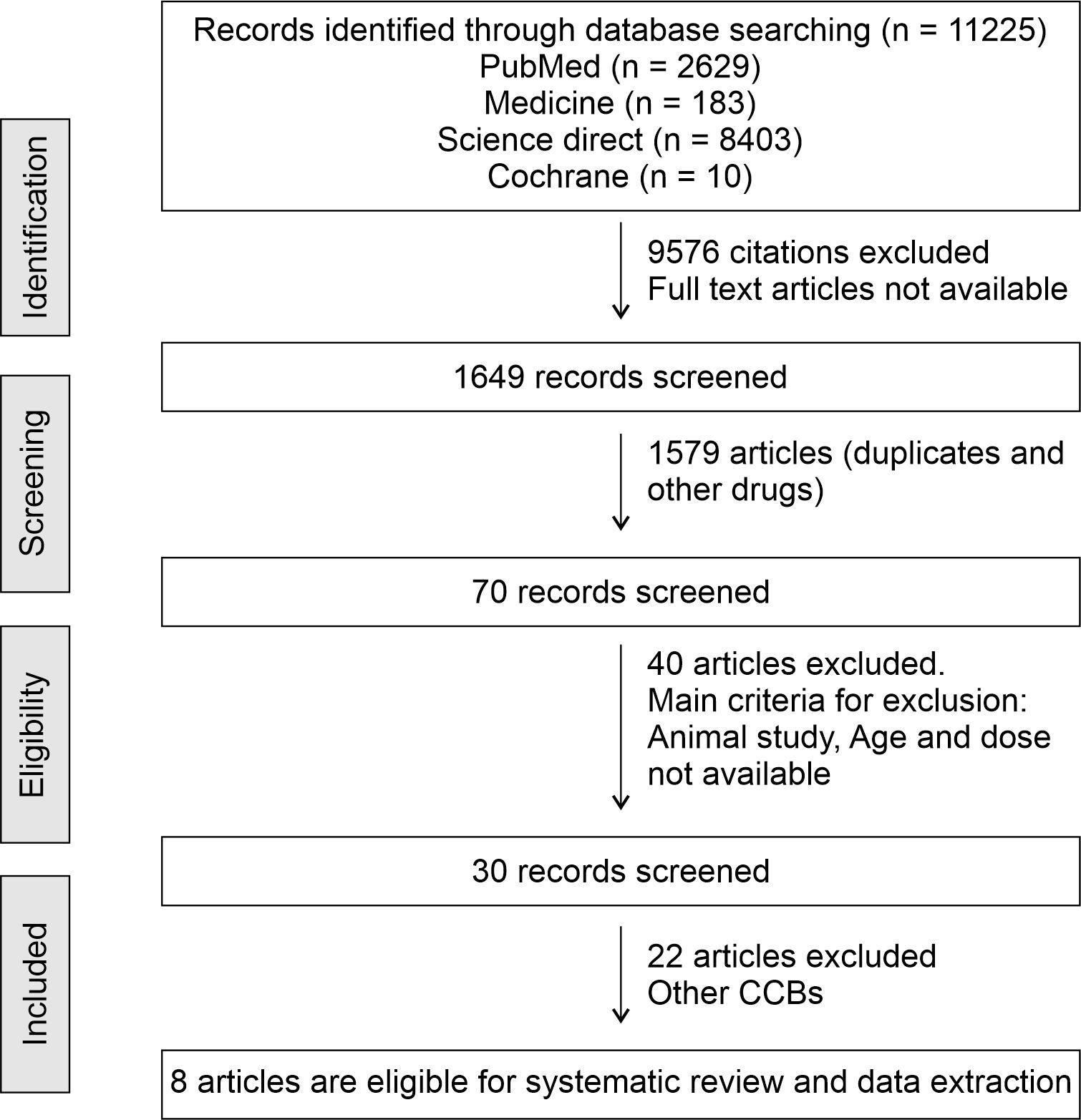
Pertinent research investigating how common GH is in patients on a CCB (amlodipine) was systematically identified using a literature search. Using particular search terms like GH, amlodipine, CCBs, gingival enlargement, oral side effects and prevalence, multiple electronic databases, including PubMed, Scopus, Web of Science, and Google Scholar, were queried in several combinations ([Figure 1]). From when the databases first started till December 2025 the search was done. Clinical trials including cohort and observational ones were eligible for inclusion. Studies in any language were also suitable for inclusion, provided an English abstract or translation was possible.
2.2. Inclusion and exclusion criterias
The studies were chosen according to certain inclusion standards. Studies had to include patients using amlodipine (a CCB) and report on GH as an outcome. Only peer-reviewed original research papers—including case reports, pilot studies, in-vitro or in-vivo experiments, and observational studies—were taken under discussion. Studies not concentrating on GH or involving amlodipine were removed as were studies not reporting relevant outcomes associated with gingival enlargement. Also excluded were reviews, abstracts, and non-peer-reviewed publications.
2.3. Data extraction
A standardized extraction form was used to extract data from qualified research. Study features (such as author, year, sample size, and design), details of the intervention (e.g., dosage and duration of Amlodipine use), and primary outcome measures, such as the prevalence and severity of GH, affected regions, and clinical grading scales (e.g., modified Gingival Index), were among the most important data points. Secondary data was also obtained, such as patient characteristics (e.g., age, sex, comorbidities), variables affecting GH (e.g., oral hygiene, smoking, blood pressure control), and dosage changes in Amlodipine. The extracted data were analyzed for their truthfulness and consistency.
2.4. Quality assessment
Established instruments were used to appraise the quality of the series of case studies provided. Since the research consisted of case series, the Case Series Quality Assessment Tool was used to evaluate important variables including study design, sample size, patient selection, outcome reporting, and follow-up duration. This instrument assists in deciding whether the project had an explicit objective, methodical data gathering, and whether any possible reporting bias or patient selection existed. Further-more assessed were the presence of confounding variables, blinding, and risk of reporting bias.
2.5. Data analysis and synthesis
Data taken from chosen research were first classified and later on analyzed in a descriptive manner. Attributes like experimental set-up, number of subjects, their demographic profile, amlodipine dosage and therapy time, frequency of gingival hyperplasia, risk factors associated, clinical symptoms, and methods of managing were gathered and presented in a summary. Since the studies that participated in our review were varying a lot in their very nature, in the characteristics of their samples, and in how they measured the output, we decided against carrying out a quantitative meta-analysis. That being said, results from the research were combined narratively to unravel commonalities, differences, and clinically significant remarks of amlodipine-induced gingival hyperplasia.
3. Results
A total of eight studies were included in this systematic review. [Table 1] described the study characteristics. Only few works incorporate in-vitro and early research, but the majority employs case studies. The sample size is small, ranging from one participants to four participants and it ranges from young children [as young as three years old] to senior persons [up-to 82 years old]. These studies include both men and women, albeit the precise gender mix varies. Regardless of age or length of use of amlodipine, the surveys indicate a significant frequency of GH as a side effect. Other researches look more into the histopathological features of the disorder, the symptom relief following drug change (e.g., amlodipine to benidipine), and the scientific basis behind the overgrowth of gingival tissues. These results stress how crucial it is to watch for gingival changes, especially in patients using amlodipine for prolonged length.
[Table 2] shows the overview of various study designs, patient demographics related to amlodipine induced gingival enlargement. This shows sample sizes ranging from single cases to small groups. The participants span a wide age range from young children to elderly individuals with both male and female subjects included. The duration of amlodipine varies significantly from two months to five years. Doses that are included are 5mg/day and 10mg/day.
[Table 3] summarizes the key findings from various studies on amlodipine induced gingival hyperplasia. This table shows even low dose and short term of amlodipine can lead to gingival hyperplasia. The key findings show that there is a need for early diagnosis and preventive measures. The findings also suggest that inflammatory factors such as IL-1b influence the development of GH. Overall the studies stress the importance of a comprehensive diagnostic approach and individualized treatment strategies for affected patient.
|
S.No |
Title |
Author |
Country |
Year |
|---|---|---|---|---|
|
1 |
Amlodipine-induced GH |
Lafzi A, Farahani RMZ, Shoja MAM.[23] |
Iran |
2006 |
|
2 |
Gingival enlargement improvement following medication change from amlodipine to benidipine and periodontal therapy |
Kamei H, Furui M, Matsubara T, et al.[24] |
Japan |
2022 |
|
3 |
Amlodipine induced gingival enlargement |
Misra SR, Koduru Lakshmi S, Mohanty N.[25] |
India |
2021 |
|
4 |
Role of histopathology in the management of the gingival enlargement in a patient on anti - hypertensive therapy based on CCBs |
Păunică S, Zurac SA, Dumitriu AS, Popa Ş, Socoliuc CG, Giurgiu MC.[26] |
Romania |
2022 |
|
5 |
Amlodipine-induced GH in chronic renal failure: a case report |
Aldemir N, Begenik H, Emre H, Erdur F, Soyoral Y.[27] |
Turkey |
2012 |
|
6 |
Gingival enlargement induced by dihydro - pyridine CCBs in a young child |
Miranda-Rius J, Brunet-Llobet L, Lahor-Soler E, Ramirez- Ramiz A.[28] |
Spain |
2014 |
|
7 |
Drug-induced GH: An *in-vitro* study using amlodipine and human gingival fibroblasts |
Lauritano D, Martinelli M, Baj A, Beltramini G, Candotto V, Ruggiero F, et al.[29] |
Italy |
2019 |
|
8 |
Expression of epithelial mesenchymal transition-associated proteins and proliferating cell nuclear antigen in DHP-induced GH fibroblasts |
Chen PH, Chuang YT, Huang CF, Lu H.K. [30] |
Taiwan |
2022 |
|
Study No |
Study design |
Sample size |
Age |
Gender |
Duration |
Dose |
|---|---|---|---|---|---|---|
|
1 |
Case study |
1 |
45 |
male |
2 months |
10mg/day |
|
2 |
Case study |
1 |
82 |
female |
5 year |
5mg/day |
|
3 |
Case study |
1 |
67 |
female |
1 year |
5mg/day |
|
4 |
Case study |
1 |
64 |
male |
2 year |
NA |
|
5 |
Preliminary study |
4 |
47 |
male |
8–24 months |
NA |
|
54 |
male |
|||||
|
63 |
male |
|||||
|
61 |
female |
|||||
|
6 |
Case study |
1 |
3 |
male |
1 year |
10mg/12 hr |
|
7 |
Invitro study |
3 |
11 |
male |
2 months |
10mg/day |
|
68 |
female |
|||||
|
20 |
male |
|||||
|
8 |
Case study |
1 |
39 |
male |
1 year |
10mg/day |
|
Study No |
Findings |
|---|---|
|
1 |
Amlodipine side effects include GH, even when administered at extremely low doses and for relatively brief periods.[23] |
|
2 |
Regular dental checkups and an oral examination for gingival expansion are advised for people on CCBs (CCBs). Long-lasting CCBs are the majority of CCBs linked to gingival expansion that have been documented. Patients with gingival enlargement caused by CCBs are advised to transition from CCBs to other antihypertensive medications or to a different CCB with a low to minimal incidence of gingival enlargement before beginning periodontal therapy. Switching drugs may be a good way to manage gingival enlargement in people who have less hand dexterity when cleaning their teeth and less knowledge of plaque maintenance (such as the elderly). Switching to a different CCB of the same class that hasn't been linked to gingival enlargement may be wise, especially for patients who find it difficult to switch to another one, such those who have trouble controlling their blood pressure or are on several drugs.[24] |
|
3 |
Systemic causes, inflammation, pharmacological side effects, or inherited gingival fibromatosis can all contribute to gingival enlargement, which is the abnormal growth of gingival tissues. To diagnose gingival enlargement, which could indicate an underlying systemic disease, a comprehensive medical history and pertinent tests are required. To treat medication-induced gingival expansion, the offending medication must be found, replaced, and proper dental hygiene must be maintained .[25] |
|
4 |
Comprehensive complementary examinations are necessary when several local and systemic variables contribute to periodontal pathological changes. These investigations may help define the type of HP alterations and how periodontal treatment should be managed, even if they come at an added expense. Clinical characteristics may be impacted by systemic treatment, and changes in HP may indicate that inflammation is influencing periodontal presentation by increasing volume.[26] |
|
5 |
This initial investigation's findings suggest that IL-1b/Nif directly controls AIGH cell turnover and proliferation via the ARSlugPCNA pathway. A key function in controlling GH in AIGH is played by gingival inflammatory factors (IL-1b) and CCBs (Nif) . 27] |
|
6 |
Even in the early stages of development, severe drug-induced gingival expansion may manifest. To reduce their chance of developing this gingival dimorphism, pediatric patients on calcium antagonists should practice good oral hygiene. To remove the excess gingival tissue, a periodontal surgery is always necessary for any severe GH .[28] |
|
7 |
Even with very short-term and low-dose therapy, AIGH may be a side effect.[29] |
|
8 |
The possibility of amlodipine causing GH should be taken into account while prescribing the medication. A healthcare center should be consulted if GH occurs, and patients should be advised to practice good dental hygiene.[30] |
4. Discussion
4.1. Clinical findings
Amlodipine, which is a third-generation calcium channel blocker that belongs to the dihydropyridine group is usually prescribed for management of conditions like hypertension and angina. Compared with other calcium channel blockers, amlodipine has got the reputation of causing gingival hyperplasia though the exact extent is still unknown due to the widespread use of these medications and the prevalence of evidence from case reports rather than large epidemiological studies. Besides nifedipine, amlodipine is characterized by good pharmacokinetic profiles such as the prolonged action, higher bioavailability, and once-daily dosing making patient adherence possible and the incidence of serious side effects less.[31]
Being one of the long-acting dihydropyridine calcium channel blockers, amlodipine is used in treating hypertension and angina.[32] Several clinical case reports have identified the role played by oral hygiene status, duration of drug use, and plaque-induced gingival inflammation as the factors related to amlodipine-induced gingival hyperplasia but the exact causal mechanism remains unresolved.[33] As some previous research, about 1.7–3% of patients receiving amlodipine therapy report drug-induced overgrowth of gums.[34] The case reports spanned different age groups and treatment durations, highlighting that amlodipine therapy can lead to dental changes and underscoring the importance of regular dental evaluation during long-term amlodipine therapy.
Change of the drug is probably still the most effective treatment strategy. A noticeable reduction in both inflamed and enlarged gums has been achieved when non-surgical (Periodontitis Phase I), and replacing amlodipine with another class of anti-hypertensives.[18] The problem of gingival enlargement caused by the drugs is mostly approached using maintaining good mouth hygiene, visiting dentist regularly for periodontal check-up, changing medication in some cases, and undergoing surgical removal of the gum tissue - gingivectomy - if needed.[34] Moderate to severe cases of gingival enlargement which are not resolved by non-invasive treatments are usually considered candidates for laser-assisted gingivectomy, which could be either carbon dioxide or yttrium-aluminium - garnet lasers. When one cannot change the medication because of contraindications and conservative methods are unsuccessful then still surgery is the best option.[35]
4.2. Findings of in-vitro studies
Clinical case reports have detailed the appearance and treatment of amlodipine-induced gingival hyperplasia. Yet, in-vitro studies have shed significant light on the biological mechanisms behind the condition. Despite that, the exact pathogenesis remains only partially elucidated, and inflammatory and non-inflammatory mechanisms both have a role. The postulated mechanisms are such as the upregulation of keratinocyte growth factor (KGF),[36] the inhibition of the synthesis of aldosterone that would lead to a compensatory increase of adrenocorticotropic hormone levels [35], and a reduction of the activity of collagenase that results from a decreased folic acid intake. Laboratory results have shown that it is the combination of bacterial plaque and the direct toxic effects of concentrated drug metabolites that leads to the inflammatory process in the gingival tissues.[37] Such an inflammatory response is followed by an increase in transforming growth factor-beta (TGF-1) as well as a number of other cytokines,[38] this way resulting in an increase of connective tissue and a change in the shape of the gingiva. As researchers, the main event in the amlodipine-induced hyperplasia is the interaction of these molecules - fibroblast mediators, inflammatory, and drug metabolites.[39] Another possibility is that the individual's susceptibility is related to the polymorphisms of the MDR1 and collagen-related genes, at least per the researchers.[15]
In-vitro experiments with samples obtained from the gingiva of healthy people showed that amlodipine at 1,000ng/mL concentration does not affect cell health negatively and can still be an experimental model. On top of that, this study also pointed out that the levels of CCR10 and inflammatory genes like IL1A, IL1B, IL5, IL7, TNFSF10, and even SPP1 were upregulated, which might cause the hypothesis that amlodipine has the capability of inducing the inflammatory signaling pathway responsible for gingival overgrowth.[29] Some other research on the mechanisms has shown that the risk of amlodipine-induced gum overgrowth can be greater for those who have a familial risk, are males, have poor oral hygiene, etc. Of all, poor oral health is probably the easiest one to control and change as it is directly related with triggering the release of cytokines besides the proliferation of fibroblasts and the synthesis of collagen. The drug seems to accelerate these events by making it possible to accumulate extracellular matrix, and also by preventing it from degradation.[40] Amlodipine also leads to over-production of interleukin that may be one reason for the pathogenesis of gum overgrowth. It works by stimulating the growth of connective tissue cells and enhancing production of collagen and glycosaminoglycans.[41]
5. Conclusion
Our comprehensive analysis pointed out that amlodipine induced gingival hyperplasia is a potent side effect with the possibility of affecting individuals of any age, even with small doses and short duration exposure. Besides the direct drug-related actions, the disease seems to be caused by an interaction of factors including inflammatory mediators, genetic predisposition, and oral hygiene. Preventive measures should consist of early detection, regular dental check-ups, and strict oral hygiene. Changing the drug, intensive periodontal treatment, and surgical intervention as a last resort constitute the treatment modalities that can effectively yield the desired clinical results.
5.1. Limitations
Although our understanding of amlodipine- induced gingival hyperplasia has advanced significantly, there are still a number of obstacles to overcome. The intricate interaction of drug effects, host cellular responses, and environmental factors like oral hygiene has left us unsure of the precise biological mechanisms underlying this condition. This lack of understanding hinders individualized treatment plans and restricts the development of highly targeted therapies. Additionally, there are significant differences in the prevalence and severity of gingival hyperplasia among various populations. These variations may be caused by genetic variations, variations in drug metabolism, and patient compliance with oral hygiene- all of which are challenging to control and measure precisely. Clinically, replacing the offending medication or undergoing surgery are frequently required, but they are not always practical or successful. Surgery carries risks of recurrence and patient discomfort, and stopping a medication can occasionally be contraindicated due to cardiovascular risk. Moreover, there are differences in clinical results because there are no widely recognized standardized treatment protocols. Another drawback is the absence of biomarkers or predictive tools to identify high-risk individuals, which reduces the effectiveness of early intervention and prevention.
5.2. Future recommendations
In order to develop targeted pharmacologic interventions, future research should concentrate on completely clarifying the molecular and cellular pathways involved in drug-induced gingival overgrowth. Personalized prevention strategies and safer antihypertensive medication prescriptions would be made possible by the identification of particular genetic markers or biochemical signatures that predict susceptibility. Standardized protocols for the timing and combination of surgical and non-surgical treatments, including more recent technologies like laser excision, would improve patient outcomes and lower the incidence of recurrence. Additionally, exploring adjunctive therapies that modulate inflammation and fibrosis could enhance treatment efficacy. Greater interdisciplinary collaboration between healthcare providers, including dentists, physicians, and pharmacologists, is essential to improve early detection, patient education and coordination of care. Public health efforts should emphasize awareness about drug-related oral side effects and promote consistent oral hygiene practices. Special attention should be given to vulnerable groups such as children and elderly patients, developing tailored management and preventive protocols for these populations. Incorporating patient- centric approaches that focus on compliance, regular dental follow-ups, and behavioural modification will also be fundamental in minimizing the impact of this condition.
6. Authors Contribution
S Gokul Shathriya: Conceptualization, data curation, formal analysis, investigation, methodology. R Harrini: Conceptualization, data curation, formal analysis, investigation, methodology. R Rohit Ashwin: Conceptualization, data curation, formal analysis, investigation. S Sivaram: Conceptualization, data curation, formal analysis, investigation, methodology. Dhivya Kothandan: Conceptualization, data curation, formal analysis, investigation, methodology, supervision.
7. Source of Funding
None.
8. Conflict of Interest
None.
9. Acknowledgement
The authors would like to extend their gratitude to the management of C.L. Baid Metha College of Pharmacy for their encouragement, support, guidance, and provision of research facilities.
References
- Inglés E, Rossmann J, Caffesse R. New clinical index for drug-induced gingival overgrowth. Quintessence Int. 1999;30(7):467-73. [Google Scholar]
- Prisant LM and Herman W. Calcium channel blocker induced gingival overgrowth. J Clin Hypertens (Greenwich). 2002;4(4):310-1. [Google Scholar] [Crossref]
- Takada K, Sugiyama H, Umezawa K, Mega J, Hirasawa M. The subgingival microflora in phenytoin-induced gingival hyperplasia. J Periodontal Res. 2003;38(5):477-81. [Google Scholar] [Crossref]
- Cebrian J, Chamorro M, Arias J, Gomez E. Extreme phenytoin-induced gingival hyperplasia. Presentation of two cases. Med Oral. 1998;3(4):237-40. [Google Scholar]
- Seymour R, Ellis J, Thomson J, Monkman S, Idle J. Amlodipine-induced gingival overgrowth. J Clin Periodontol. 1994;21(4):281-3. [Google Scholar] [Crossref]
- Pradhan S, Mishra P. Gingival enlargement in antihypertensive medication. J Nepal Med Assoc. 2009;48(174):149-52. [Google Scholar]
- Rees TD and Levine R. Systemic drugs as a risk factor for periodontal disease initiation and progression. Compend Contin Educ Dent. 1995;16(1):20-42. [Google Scholar]
- Garzino-Demo P, Carbone M, Carrozzo M, Broccoletti R, Gandolfo S. An increase in gingival volume induced by drugs (phenytoin, cyclosporine and calcium antagonists). A review of the literature. Minerva Stomatol. 1998;47(9):387-98. [Google Scholar]
- Ellis J, Seymour R, Steele J, Robertson P, Butler T, Thomason J. Prevalence of gingival overgrowth induced by calcium channel blockers: a community-based study. J Periodontol. 1999;70(1):63-7. [Google Scholar] [Crossref]
- Jorgensen M. Prevalence of amlodipine-related gingival hyperplasia. J Periodontol. 1997;68(7):676-8. [Google Scholar] [Crossref]
- Seymour R. Effects of medications on the periodontal tissues in health and disease. Periodontol 2000. 2000;40(1):120-9. [Google Scholar] [Crossref]
- Behari M. Gingival hyperplasia due to sodium valproate. J Neurol Neurosurg Psychiatry. 1991;54(3):279-80. [Google Scholar] [Crossref]
- Valsecchi R, Cainelli T. Gingival hyperplasia induced by erythromycin. Acta Derm Venereol. 1992;72(2). [Google Scholar]
- Hallmon W, Rossmann J. The role of drugs in the pathogenesis of gingival overgrowth. A collective review of current concepts. Periodontol 2000. 2000;21(1):176-96. [Google Scholar] [Crossref]
- Dongari-Bagtzoglou A, Research SaTC. Drug-associated gingival enlargement. J Periodontol. 2004;75(10):1424-31. [Google Scholar] [Crossref]
- Kantarci A, Nseir Z, Kim Y, Sume SS and Trackman P. Loss of basement membrane integrity in human gingival overgrowth. J Dent Res. 2011;90(7):887-93. [Google Scholar] [Crossref]
- Sume S, Kantarci A, Lee A, Hasturk H, Trackman P. Epithelial to mesenchymal transition in gingival overgrowth. Am J Pathol. 2010;177(1):208-18. [Google Scholar] [Crossref]
- Mavrogiannis M, Ellis J, Thomason J, Seymour R. The management of drug-induced gingival overgrowth. J Clin Periodontol. 2006;33(6):434-9. [Google Scholar] [Crossref]
- Lu H, Tseng C, Lee Y, Li C, Wang L. Flutamide inhibits nifedipine- and interleukin-1 beta-induced collagen overproduction in gingival fibroblasts. J Periodontal Res. 2010;45(4):451-7. [Google Scholar] [Crossref]
- Camargo P, Melnick P, Pirih F, Lagos R, Takei H. Treatment of drug-induced gingival enlargement: aesthetic and functional considerations. Periodontol 2000. 2000;27(1):131-8. [Google Scholar] [Crossref]
- Hegde R, Kale R, Jain A. Cyclosporine and amlodipine induced severe gingival overgrowth — etiopathogenesis and management of a case with electrocautery and carbon-dioxide (CO2) laser. J Oral Health Comm Dent. 2012;6(1):34-42. [Google Scholar]
- Taib H, Ali T, Kamin S. Amlodipine induced gingival overgrowth: a case report. Arch Orofac Sci. 2007;2:61-4. [Google Scholar]
- Lafzi A, Farahani R, Shoja M. Amlodipine-induced gingival hyperplasia. Med Oral Patol Oral Cir Bucal. 2006;11(6):E480-2. [Google Scholar]
- Kamei H, Furui M, Matsubara T, Inagaki K. Gingival enlargement improvement following medication change from amlodipine to benidipine and periodontal therapy. BMJ Case Rep. 2022;15(5). [Google Scholar] [Crossref]
- Misra S, Lakshmi S, Mohanty N. Amlodipine induced gingival enlargement. BMJ Case Rep. 2021;14(8). [Google Scholar] [Crossref]
- Păunică S, Zurac S, Dumitriu AS PÈ, Socoliuc C, Giurgiu M. Role of histopathology in the management of the gingival enlargement in a patient on antihypertensive therapy based on CCBs: a case report. Rom J Morphol Embryol. 2022;63(1):253-9. [Google Scholar] [Crossref]
- Aldemir N, Begenik H, Emre H, Erdur F, Soyoral Y. Amlodipine-induced gingival hyperplasia in chronic renal failure: a case report. Afr Health Sci. 2012;12(4):576-8. [Google Scholar] [Crossref]
- Miranda-Rius J, Brunet-Llobet L, Lahor-Soler E, Ramirez-Ramiz A. Gingival enlargement induced by dihydropyridine calcium channel blockers in a young child. BMJ Case Rep. 2014;2014. [Google Scholar] [Crossref]
- Lauritano D, Martinelli M, Baj A, Beltramini G, Candotto V and Ruggiero F. Drug-induced gingival hyperplasia: an in vitro study using amlodipine and human gingival fibroblasts. Int J Immunopathol Pharmacol. 2019;33. [Google Scholar] [Crossref]
- Chen P, Chuang Y, Huang CF and Lu H. Expression of epithelial–mesenchymal transition-associated proteins and proliferating cell nuclear antigen in dihydropyridine-induced gingival overgrowth fibroblasts: a preliminary study. J Dent Sci. 2023;18(2):551-9. [Google Scholar] [Crossref]
- Vinayaka A, Gayathri G, Triveni M. A clinico-histopathological report on low dose of amlodipine: A third-generation calcium channel blocker-induced gingival overgrowth. J Oral Med Oral Surg Oral Pathol Oral Radiol. 2021;7(3):182-5. [Google Scholar] [Crossref]
- Ellis J, Seymour R, Thomason J, Monkman SC and Idle J. Gingival sequestration of amlodipine induced gingival overgrowth. Lancet. 1993;341(8852):1102-3. [Google Scholar] [Crossref]
- Gregoriou A, Schneider P, Shaw P. Phenobarbital-induced gingival overgrowth? Report of two cases and complications in management. ASDC J Dent Child. 1996;63(6):408-13. [Google Scholar]
- Srivastava A, Kundu D, Bandyopadhyay P, Pal A. Management of amlodipine-induced gingival enlargement: series of three cases. J Indian Soc Periodontol. 2010;14(4):279-81. [Google Scholar] [Crossref]
- Nyska A, Shemesh M, Tal H, Dayan D. Gingival hyperplasia induced by calcium-channel blockers: mode of action. Med Hypotheses. 1994;43(2):115-8. [Google Scholar] [Crossref]
- Das S, Olsen I. Keratinocyte growth factor is upregulated by hyperplasia-inducing drug nifedipine. Cytokine. 2000;12(10):1566-9. [Google Scholar] [Crossref]
- van der Vleuten CJ TMvdKP. Telangiectasia and gingival hyperplasia as side-effects of amlodipine (Norvasc) in a 3-year-old girl. Acta Derm Venereol. 1999;79(4):323-4. [Google Scholar] [Crossref]
- Border W, Noble N. Transforming growth factor beta in tissue fibrosis. N Engl J Med. 1994;331(19):1286-92. [Google Scholar] [Crossref]
- Angelopoulos AP and Goaz P. Incidence of diphenylhydantoin gingival hyperplasia. Oral Surg Oral Med Oral Pathol. 1972;34(6):898-906. [Google Scholar] [Crossref]
- Portnoy P, Lee S, McMullen A, Qu V. Amlodipine-induced gingival overgrowth: a health justice issue. J Nurse Pract. 2022;18(1):123-7. [Google Scholar] [Crossref]
- Morikawa S, Nasu M, Miyashita Y, Nakagawa T. Treatment of calcium channel blocker-induced gingival overgrowth without modifying medication. BMJ Case Rep. 2021;14(1). [Google Scholar] [Crossref]
- Abstract
- 1. Introduction
- 2. Materials and Methods
- 2.1. Literature search
- 2.2. Inclusion and exclusion criterias
- 2.3. Data extraction
- 2.4. Quality assessment
- 2.5. Data analysis and synthesis
- 3. Results
- 4. Discussion
- 5. Conclusion
- 6. Authors Contribution
- 7. Source of Funding
- 8. Conflict of Interest
- 9. Acknowledgement
- References
Article Metrics
- Visibility 42 Views
- Downloads 23 Views
- DOI 10.18231/j.ijpp.18350.1785127386
-
CrossMark

- Citation
- Received Date June 16, 2026
- Accepted Date July 22, 2026
- Publication Date August 03, 2026