Indian Journal of Pharmacy and Pharmacology
Indian Journal of Pharmacy and Pharmacology (IJPP) is an open-access, peer-reviewed pharmacy journal, published quarterly, as print and online by the Innovative Education and Scientific Research Foundation (IESRF) since 2014. we will be publishing articles ‘Ahead of Print’ immediately upon acceptance of manuscript. In addition, the journal allows free access (Open Access) to its contents, which is likely to attract more readers and citations to articles published in journal.Manuscripts should be prepared in accordance with the author guidelines of the journal, which follow the recommendations...
Real-world analysis of ventilator-associated technical adverse events and preventive maintenance deficiencies under materiovigilance surveillance

Abstract
Background: Mechanical ventilators are critical life-support medical devices extensively utilized in intensive care units for the management of critically ill patients requiring respiratory support. Despite technological advancements, ventilator-associated technical malfunctions, calibration deficiencies, alarm failures, and inadequate preventive maintenance may compromise patient safety and clinical outcomes. Continuous post-marketing surveillance through materiovigilance systems is therefore essential for the early identification, reporting, and prevention of device-associated adverse events in routine healthcare practice.
Objective: To evaluate the frequency, pattern, severity classification, and technical characteristics of ventilator-associated adverse events reported under materiovigilance surveillance in a tertiary care teaching hospital.
Materials and Methods: A prospective cross-sectional observational study was conducted at the Medical Device Monitoring Centre operating under the Materiovigilance Programme of India at Sri Aurobindo Medical College and Post Graduate Institute, Indore, India, between September 2022 and February 2023. Data were obtained from Medical Device Adverse Event reporting forms submitted to the Indian Pharmacopoeia Commission. Ventilator-associated adverse events were evaluated for demographic characteristics, severity classification, calibration status, preventive maintenance history, utilization duration, and technical malfunction patterns using descriptive statistical analysis.
Results: Among 120 reported medical device adverse events, 27 (22.5%) were associated with mechanical ventilators. Low tidal volume was the most frequently reported technical abnormality (40.74%), followed by alarm failure (14.81%) and flow sensor malfunction (11.11%). All reported incidents were classified as near-miss events, with no serious adverse events observed during the study period. Calibration records were available for 85.15% of ventilators; however, preventive maintenance documentation was available for only 40.74% of devices, indicating potential deficiencies in routine maintenance practices and biomedical monitoring systems.
Conclusion: The present study provides important real-world evidence regarding ventilator-associated technical adverse events under materiovigilance surveillance. The findings highlight the clinical importance of active materiovigilance reporting, routine technical evaluation, standardized calibration practices, and structured preventive maintenance strategies for improving ventilator safety and minimizing preventable device-related risks in critical care settings. Strengthening integrated biomedical engineering support and post-marketing surveillance systems may substantially enhance patient safety and operational reliability of mechanical ventilators.
1. Introduction
Mechanical ventilators are among the most critical life-support medical devices used in modern intensive care practice for the management of patients with acute or chronic respiratory failure. These devices are extensively utilized in intensive care units (ICUs), emergency departments, perioperative care, and high-dependency settings to provide adequate oxygenation and ventilation in critically ill patients. Mechanical ventilation plays an essential role in the management of conditions such as acute respiratory distress syndrome (ARDS), chronic obstructive pulmonary disease (COPD), severe pneumonia, neurological disorders, trauma, and postoperative respiratory compromise.[1] The global demand for ventilatory support further increased during the COVID-19 pandemic, emphasizing the indispensable role of ventilators in critical care medicine and emergency preparedness systems.[2]
Recent advancements in ventilator technology have led to the incorporation of sophisticated monitoring systems, automated alarms, digital sensors, software-assisted ventilation modes, and integrated patient monitoring interfaces. Despite these technological developments, ventilator-associated technical malfunctions and operational failures continue to pose significant risks to patient safety. Common device-related problems such as low tidal volume delivery, alarm failure, flow sensor malfunction, oxygen supply interruption, software errors, calibration instability, and circuit-related abnormalities may compromise respiratory support and delay timely clinical intervention.[3] Such technical failures may adversely affect clinical outcomes, prolong intensive care stay, and increase the risk of preventable complications in critically ill patients receiving ventilatory support.[4]
Medical devices are defined by the World Health Organization as instruments, apparatus, machines, implants, software, or related articles intended for the diagnosis, prevention, monitoring, or treatment of disease.[5] With the increasing dependence on technologically advanced medical devices in healthcare systems, continuous post-marketing surveillance has become essential for ensuring device safety, performance, and reliability. Materiovigilance represents an important component of medical device safety surveillance involving the systematic identification, reporting, evaluation, and prevention of adverse events associated with medical devices during routine clinical use.[6] In India, the Materiovigilance Programme of India coordinated by the Indian Pharmacopoeia Commission was established to strengthen medical device adverse event reporting systems and improve patient safety through structured post-marketing surveillance mechanisms.[7]
The rapid expansion in ventilator utilization during and following the COVID-19 pandemic further highlighted concerns regarding device performance, maintenance quality, calibration practices, and biomedical engineering support systems. Emergency deployment of ventilators, prolonged utilization of aging equipment, increased workload in critical care settings, and variability in preventive maintenance practices may collectively increase the likelihood of technical malfunctions and near-miss incidents associated with ventilator use.[8] Consequently, systematic surveillance of ventilator-associated adverse events has become increasingly important for identifying operational vulnerabilities and strengthening healthcare quality assurance systems.
Although previous studies have predominantly focused on ventilation strategies, respiratory outcomes, ventilator-associated pneumonia, and clinical management protocols, limited real-world evidence is available regarding ventilator-related technical adverse events, calibration practices, preventive maintenance deficiencies, and near-miss incidents under structured materiovigilance surveillance frameworks, particularly in developing healthcare settings such as India.[9] Furthermore, relatively few studies have evaluated the relationship between ventilator-associated technical abnormalities and biomedical maintenance practices within tertiary care institutions. Identification of these device-related vulnerabilities is important for improving biomedical engineering services, optimizing preventive maintenance protocols, strengthening adverse event reporting culture, and enhancing patient safety standards in intensive care environments.[10]
Therefore, the present study titled “Real-World Analysis of Mechanical Ventilator-Associated Adverse Events under Materiovigilance Surveillance” was conducted to evaluate the frequency, pattern, severity classification, and technical characteristics of ventilator-associated adverse events reported in a tertiary care teaching hospital. The study additionally aimed to assess calibration status, preventive maintenance practices, and common ventilator-related technical malfunctions under real-world clinical conditions. The findings of this study may contribute toward strengthening integrated materiovigilance systems, improving biomedical equipment management practices, and minimizing preventable ventilator-associated risks in critical care settings.
2. Materials and Methods
2.1. Study design setting and ethical approval
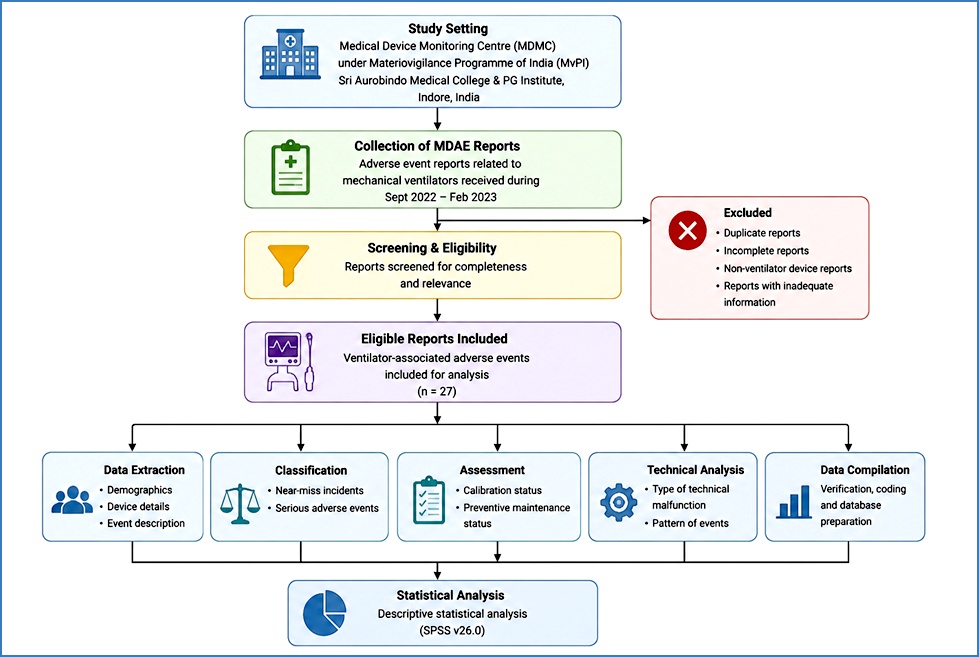
A prospective cross-sectional observational study was conducted at the Medical Device Monitoring Centre (MDMC) functioning under the Materiovigilance Programme of India at Sri Aurobindo Medical College and Post Graduate Institute, Indore, Madhya Pradesh, India, between September 2022 and February 2023.[11] The study was designed to generate real-world evidence regarding ventilator-associated adverse events reported during routine clinical practice in critical care settings. The overall methodological workflow adopted for ventilator-associated adverse event evaluation under materiovigilance surveillance is illustrated in Figure 1.
Mechanical ventilators are categorized as high-risk life-support medical devices requiring continuous technical monitoring, periodic calibration, and structured preventive maintenance to ensure optimal therapeutic performance and patient safety.[12] The increased utilization of ventilators during and following the COVID-19 pandemic further emphasized the importance of systematic surveillance of ventilator-associated adverse events and near-miss incidents within established materiovigilance frameworks.[13] Accordingly, the present study aimed to evaluate the frequency, pattern, severity classification, and technical characteristics of ventilator-associated adverse events in a tertiary healthcare institution.
Data collection was performed throughout the study period, followed by verification, compilation, and descriptive statistical analysis. The study was conducted in accordance with the ethical principles of the World Medical Association Declaration of Helsinki and complied with institutional ethical guidelines for biomedical and medical device-related research.[14] Confidentiality of patient identity and device-related information was strictly maintained during all phases of the study. Ethical approval was obtained from the Institutional Ethics Committee of Sri Aurobindo Medical College and Post Graduate Institute, Indore (Approval No. SAIMS/EIC/34/22).
2.2. Data source and case identification
Data were collected from Medical Device Adverse Event (MDAE) reporting forms submitted to the Indian Pharmacopoeia Commission through the institutional Medical Device Monitoring Centre established under the Materiovigilance Programme of India. Adverse event reports were voluntarily submitted by healthcare professionals including physicians, nurses, respiratory therapists, and biomedical engineers involved in ventilator management and intensive care practice.[15]
All reported ventilator-associated adverse events and near-miss incidents documented during the study period were screened for eligibility after verification of completeness, clinical relevance, and technical validity. Reports containing adequate information regarding device characteristics, event description, maintenance status, calibration history, and technical malfunction patterns were included in the study analysis. Incomplete reports, duplicate entries, reports lacking essential technical information, and adverse events unrelated to mechanical ventilators were excluded from the final evaluation.
Relevant demographic, clinical, maintenance-related, and technical variables were extracted from the reporting forms using a structured data collection approach. Extracted parameters included patient demographic characteristics, ventilator-associated technical abnormalities, severity classification, calibration records, preventive maintenance status, duration of device utilization, and intervals between calibration and adverse event occurrence.[16]
2.3. Classification of adverse events
Reported adverse events were classified according to the guidelines of the Materiovigilance Programme of India based on the nature of the incident, clinical severity, and potential impact on patient safety. Classification was performed using the clinical and technical information documented in the Medical Device Adverse Event (MDAE) reporting forms.[17] Adverse events were categorized as either near-miss incidents or serious adverse events according to standardized materiovigilance assessment criteria ([Table 1]). Near-miss incidents were defined as ventilator-related technical abnormalities or operational malfunctions with the potential to cause patient harm but identified before resulting in clinically significant consequences. Serious adverse events included incidents associated with death, life-threatening conditions, prolonged hospitalization, permanent impairment, or major medical intervention attributable to device malfunction.[18] This standardized classification framework ensured consistency, reliability, and uniformity in ventilator-associated adverse event reporting and post-marketing materiovigilance surveillance.
|
Classification |
Definition |
Clinical Significance |
|---|---|---|
|
Near-miss incident |
Device-related event with the potential to cause harm but identified before affecting the patient. |
No significant patient injury or clinical deterioration. |
|
Serious adverse event |
Event resulting in death, life-threatening condition, prolonged hospitalization, permanent impairment, or significant medical intervention. |
Major impact on patient safety and clinical outcome. |
2.4. Assessment of calibration and preventive maintenance status
Calibration status and preventive maintenance history of ventilators associated with adverse event reporting were evaluated using biomedical maintenance records and device documentation available at the institution. Calibration assessment included verification of documented calibration procedures and intervals between the most recent calibration date and occurrence of the reported adverse event. Preventive maintenance evaluation included assessment of scheduled maintenance documentation, servicing records, and biomedical engineering maintenance history associated with the ventilators.[19] The duration between ventilator installation date and adverse event occurrence was additionally analyzed to evaluate the influence of prolonged device utilization on technical malfunction trends. These maintenance-related assessments were performed to identify potential operational vulnerabilities associated with ventilator safety and performance during routine clinical use.
2.5. Statistical analysis
Collected data were compiled, coded, and analyzed using Microsoft Excel (Microsoft Corporation, Redmond, WA, USA) and Statistical Package for the Social Sciences (SPSS) software version 26.0 (IBM Corp., Armonk, NY, USA). Descriptive statistical methods were used to evaluate demographic characteristics, severity classification, calibration status, preventive maintenance documentation, and technical malfunction patterns associated with ventilator-related adverse events.[20] Continuous variables, including patient age, duration between ventilator installation and adverse event occurrence, and calibration intervals, were expressed as mean ± standard deviation (SD), whereas categorical variables were summarized using frequencies and percentages. Chi-square test or Fisher’s exact test, where appropriate, was applied to evaluate associations between preventive maintenance status and ventilator-associated technical malfunctions. Spearman’s rank correlation analysis was performed to assess relationships between calibration intervals and technical abnormality frequency. A p-value <0.05 was considered statistically significant.[21][22]
3. Results
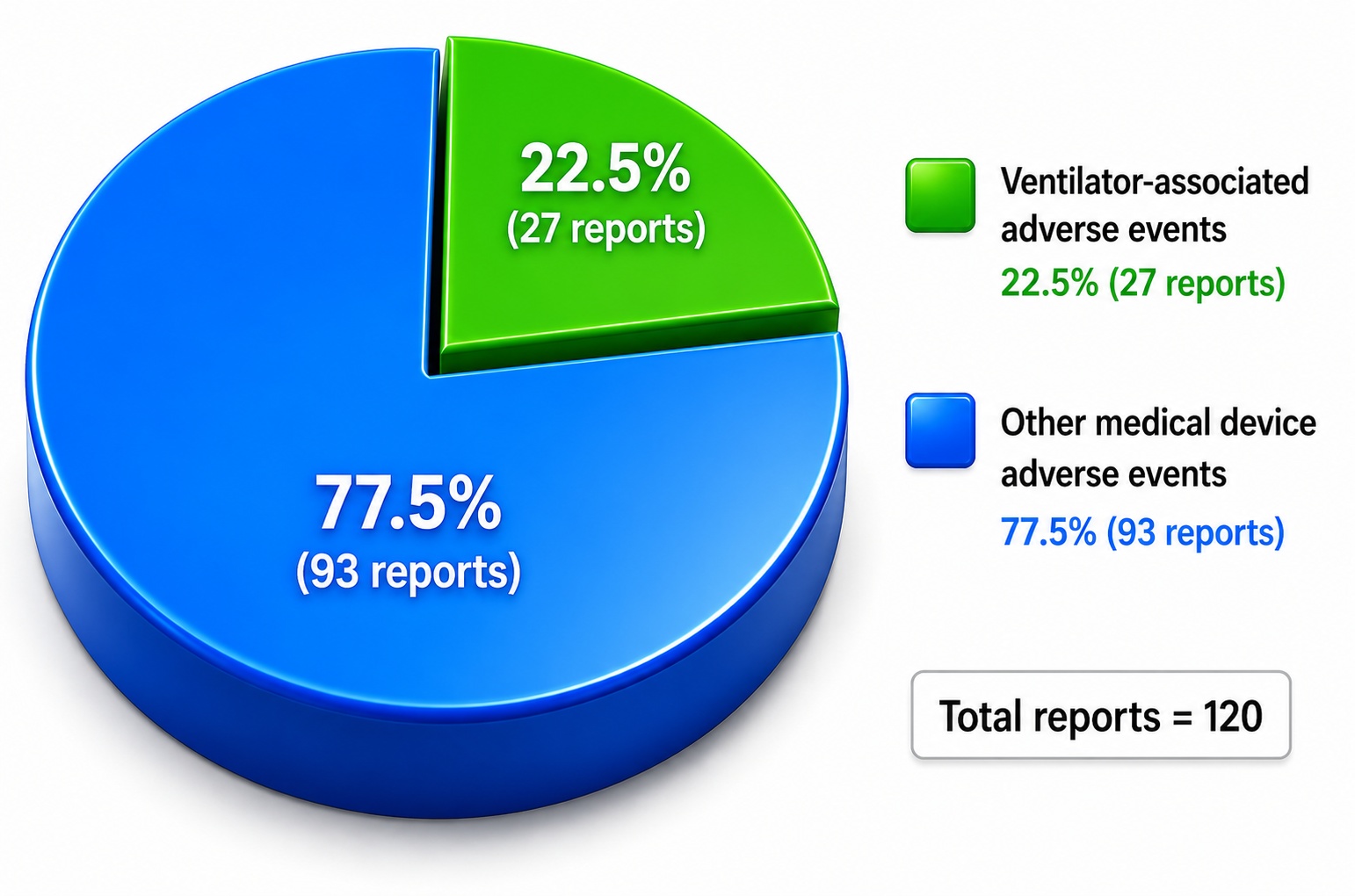
During the study period, a total of 120 medical device adverse event reports were received at the Medical Device Monitoring Centre (MDMC), among which 27 (22.5%) were associated with mechanical ventilators under materiovigilance surveillance. Ventilator-associated adverse events represented a considerable proportion of total reported device-related incidents, emphasizing the clinical relevance of continuous ventilator safety monitoring and post-marketing surveillance in critical care settings ([Figure 2]).
3.1. Demographic characteristics of ventilator associated adverse events
Among the 27 ventilator-associated adverse event reports, 15 (55.5%) involved male patients, whereas 7 (26.0%) were associated with female patients. In 5 (18.5%) reports, no direct patient involvement was documented because the incidents occurred during ventilator testing, calibration procedures, or technical evaluation processes. The mean age of patients associated with ventilator-related adverse events was 49.52 ± 21.42 years ([Table 2]). These findings indicate that ventilator-associated adverse events were predominantly observed among middle-aged and older critically ill patients receiving respiratory support in intensive care settings.
|
Variable |
Category |
n (%) / Mean ± SD |
|---|---|---|
|
Gender distribution |
Male |
15 (55.5) |
|
Female |
7 (26.0) |
|
|
No patient involvement |
5 (18.5) |
|
|
Total |
27 (100) |
|
|
Age distribution |
Age of patients (years) |
49.52 ± 21.42 |
3.2. Severity classification of ventilator associated adverse events
Severity assessment of ventilator-associated adverse events according to Materiovigilance Programme of India (MvPI) classification criteria revealed that all reported incidents were categorized as near-miss events, whereas no serious adverse events were observed during the study period. These findings suggest that the identified ventilator-related technical abnormalities and operational malfunctions were detected before resulting in clinically significant patient harm. The predominance of near-miss incidents reflects the potential role of active materiovigilance surveillance, routine technical evaluation, and timely biomedical intervention in minimizing serious ventilator-associated complications within critical care settings ([Table 3]).
|
Severity Classification |
Number of Reports (n=27) |
Percentage (%) |
|---|---|---|
|
Near-miss incidents |
27 |
100 |
|
Serious adverse events |
0 |
0 |
3.3. Calibration and preventive maintenance status of ventilators
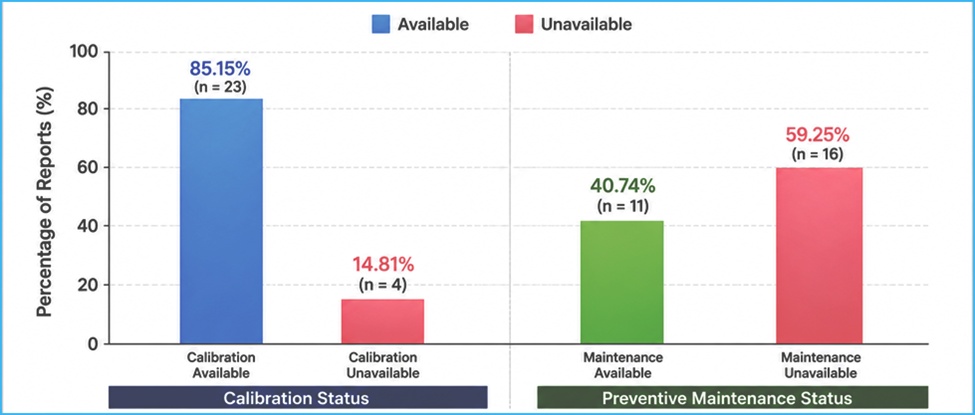
Assessment of maintenance-related parameters demonstrated that 23 (85.15%) ventilators associated with adverse event reporting had documented calibration records, whereas 4 (14.81%) devices lacked documented calibration history. In contrast, preventive maintenance documentation was available for only 11 (40.74%) ventilators, while 16 (59.25%) devices had no documented preventive maintenance status ([Figure 3]). Preventive maintenance documentation was substantially lower than calibration documentation, indicating potential deficiencies in routine biomedical maintenance practices. These findings suggest that inadequate preventive maintenance and irregular servicing may contribute to ventilator-associated technical malfunctions and operational deficiencies during routine clinical utilization.
3.4. Time related analysis of ventilator associated adverse events
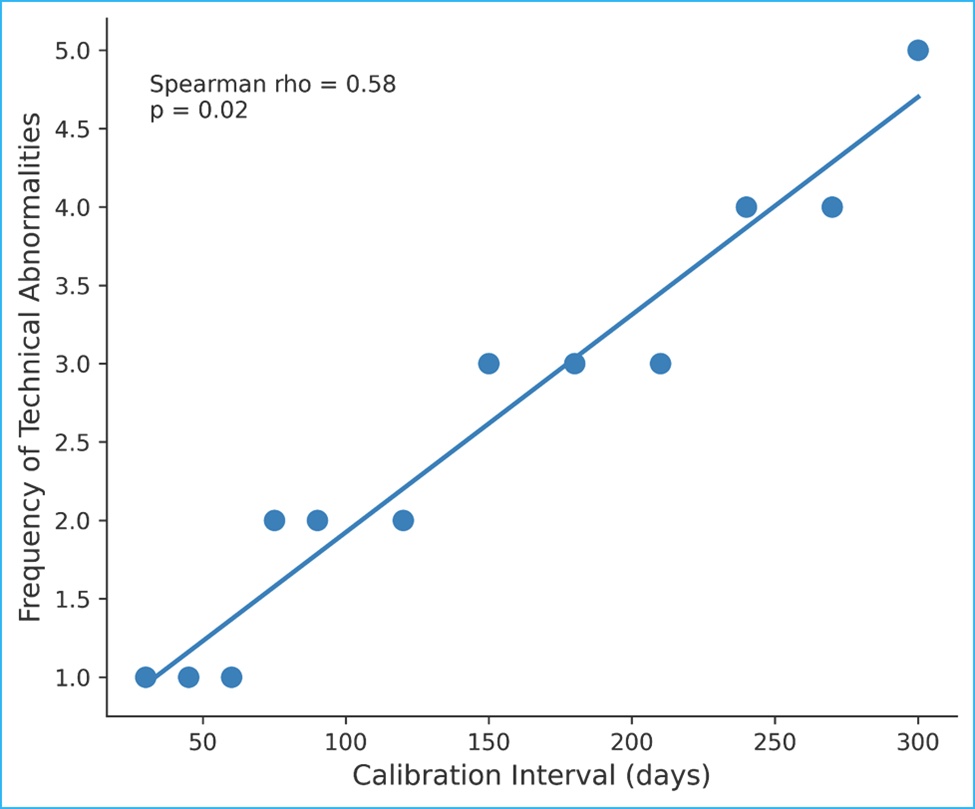
Time-related analysis demonstrated substantial variability in ventilator utilization duration and calibration intervals among devices associated with adverse event reporting. The mean duration between ventilator installation and occurrence of adverse events was 49.47 ± 47.89 months, indicating prolonged clinical utilization of several ventilators prior to adverse event identification. Similarly, the mean interval between the most recent calibration date and adverse event occurrence was 172.52 ± 123.73 days, reflecting inconsistencies in calibration scheduling and preventive maintenance practices across evaluated devices. Exploratory Spearman’s rank correlation analysis demonstrated a positive association between prolonged calibration intervals and increased frequency of ventilator-associated technical abnormalities (rho = 0.58, p = 0.02), suggesting that delayed calibration practices may contribute to operational instability and reduced ventilator reliability in critical care settings ([Table 4]).
|
Time-Related Parameter |
Mean Duration ± SD |
Clinical Interpretation |
|---|---|---|
|
Duration between ventilator installation and adverse event occurrence (months) |
49.47 ± 47.89 |
Indicates prolonged ventilator utilization prior to adverse event reporting. |
|
Duration between most recent calibration date and adverse event occurrence (days) |
172.52 ± 123.73 |
Reflects variability in calibration intervals and preventive maintenance scheduling. |
|
Spearman’s correlation analysis |
rho = 0.58; p = 0.02 |
Positive association between prolonged calibration intervals and increased technical abnormality frequency. |
|
Technical Problem |
Number of Events (n=27) |
Percentage (%) |
Clinical Significance |
|---|---|---|---|
|
Low tidal volume |
11 |
40.74 |
May compromise effective ventilation and oxygen delivery. |
|
Alarm failure |
4 |
14.81 |
Delayed identification of ventilator abnormalities. |
|
Flow sensor failure |
3 |
11.11 |
Inaccurate respiratory parameter monitoring. |
|
Low FiO ₂ |
1 |
3.70 |
Inadequate oxygen delivery to patient. |
|
Increased tidal volume alarm |
1 |
3.70 |
Risk of ventilator-induced lung injury. |
|
Sensor and graph error |
1 |
3.70 |
Inaccurate ventilator monitoring display. |
|
Test failure |
1 |
3.70 |
Technical malfunction during device evaluation. |
|
Device not working |
1 |
3.70 |
Complete interruption of ventilatory support. |
|
No oxygen supply |
1 |
3.70 |
Potential respiratory compromise. |
|
PEEP value and graph error |
1 |
3.70 |
Impaired airway pressure monitoring. |
|
Check valve failure |
1 |
3.70 |
Ventilator circuit dysfunction. |
|
Connection error with patient monitor |
1 |
3.70 |
Impaired integrated patient monitoring. |
|
Total |
27 |
100 |
— |
3.5. Distribution of technical problems associated with ventilator adverse events
Technical evaluation of ventilator-associated adverse events demonstrated that low tidal volume was the most frequently reported ventilator-related malfunction, accounting for 11 (40.74%) adverse event reports. Alarm failure represented the second most commonly observed technical abnormality with 4 (14.81%) reports, followed by flow sensor failure in 3 (11.11%) cases. Additional device-related technical problems included low FiO₂ delivery, increased tidal volume alarm abnormalities, sensor and graphical display errors, test failure, oxygen supply interruption, PEEP-related graph errors, device malfunction, check valve failure, and connection errors with patient monitors, each contributing 3.70% of the total reported adverse events. The predominance of ventilatory parameter-related abnormalities and alarm-associated failures highlights the clinical importance of continuous technical monitoring, routine preventive maintenance, and timely calibration practices to minimize ventilator-associated operational deficiencies in critical care settings. These findings further emphasize the critical role of active materiovigilance surveillance in the early identification and management of ventilator-related technical malfunctions before progression to clinically significant patient harm ([Table 5]).
3.6. Association between maintenance deficiencies and ventilator-associated technical malfunctions
|
Variable Evaluated |
Statistical Test |
Statistical Value |
p-value |
Interpretation |
|---|---|---|---|---|
|
Preventive maintenance status vs technical malfunction category |
Chi-square/ Fisher’s exact test |
χ² = 4.82 |
0.03 |
Significant association observed between maintenance deficiencies and ventilator technical malfunctions. |
|
Calibration interval vs technical abnormality frequency |
Spearman’s rank correlation |
rho = 0.58 |
0.02 |
Positive association observed between prolonged calibration intervals and increased technical abnormality frequency. |
Analytical evaluation demonstrated a significant association between deficiencies in preventive maintenance practices and occurrence of ventilator-associated technical malfunctions under materiovigilance surveillance. Chi-square/Fisher’s exact test revealed that ventilators lacking documented preventive maintenance records were more frequently associated with alarm-related abnormalities, ventilatory parameter instability, and sensor-related malfunctions compared with devices having documented maintenance history (p = 0.03). In addition, exploratory Spearman’s rank correlation analysis demonstrated a positive association between prolonged calibration intervals and increased frequency of technical abnormalities (rho = 0.58, p = 0.02), suggesting that delayed calibration practices may contribute to operational instability and reduced ventilator reliability during routine critical care utilization ([Figure 4]). These findings provide clinically relevant real-world evidence supporting the importance of structured preventive maintenance programs, periodic calibration verification, and integrated biomedical engineering surveillance systems for minimizing ventilator-associated technical vulnerabilities. The observed association between maintenance-related deficiencies and technical malfunction patterns further highlights the growing significance of proactive materiovigilance systems in strengthening patient safety, optimizing device performance, and reducing preventable operational risks in intensive care environments (Table 6 and Figure 4).
3.7. Major ventilator safety trends identified under materiovigilance surveillance
Overall analysis demonstrated that ventilator-associated adverse events were predominantly characterized by technical malfunctions and maintenance-related deficiencies. Low tidal volume abnormalities, alarm failure, and flow sensor malfunction represented the major technical vulnerabilities identified during routine clinical practice. Although all reported incidents were classified as near-miss events, deficiencies in preventive maintenance documentation and variability in calibration intervals indicated potential gaps in routine biomedical maintenance systems. These findings emphasize the importance of structured preventive maintenance protocols, standardized calibration practices, and strengthened materiovigilance surveillance systems for improving ventilator safety and operational reliability in critical care environments.
4. Discussion
The present study provides real-world evidence regarding ventilator-associated adverse events reported under materiovigilance surveillance in a tertiary care teaching hospital. Mechanical ventilators are indispensable life-support devices in critical care medicine, and technical malfunctions associated with these systems may compromise respiratory support, oxygen delivery, and patient safety if not identified promptly. The findings of the present study demonstrated that ventilator-associated adverse events were predominantly associated with technical abnormalities, calibration variability, and deficiencies in preventive maintenance practices, emphasizing the importance of structured materiovigilance systems and continuous biomedical surveillance in intensive care settings.
Low tidal volume was identified as the most frequently reported technical abnormality. Inadequate tidal volume delivery may impair ventilation efficiency and contribute to respiratory instability in critically ill patients requiring prolonged ventilatory support. Previous investigations have similarly reported that inaccuracies in ventilatory parameter delivery may adversely affect respiratory outcomes and increase the risk of ventilation-associated complications, including hypoventilation and ventilator-induced lung injury.[23] The predominance of ventilatory parameter-related abnormalities observed in the present study therefore highlights the importance of continuous ventilator performance monitoring, periodic calibration verification, and timely technical intervention to minimize preventable respiratory compromise.
Alarm failure and flow sensor malfunction were also among the commonly reported technical abnormalities. Alarm systems are essential safety components in modern ventilators because they facilitate early recognition of device malfunction and physiological deterioration. Delayed or failed alarm activation may postpone clinical intervention and increase the likelihood of preventable patient harm. Similarly, flow sensor malfunction may impair respiratory parameter monitoring and ventilator performance assessment.[24] These findings reinforce the clinical importance of routine technical evaluation and structured biomedical maintenance programs for maintaining ventilator reliability in critical care practice.
An important observation of the present study was that all reported incidents were categorized as near-miss events, while no serious adverse events were identified during the study period. Near-miss reporting plays a critical role in materiovigilance because it enables early identification of latent technical deficiencies and operational vulnerabilities before progression to clinically significant patient injury. Furthermore, the study demonstrated a statistically significant association between preventive maintenance deficiencies and ventilator-associated technical malfunctions. Prolonged calibration intervals were positively associated with increased technical abnormality frequency, suggesting that delayed calibration practices may contribute to reduced ventilator reliability. Overall, the findings highlight the growing importance of active materiovigilance systems, standardized preventive maintenance protocols, and integrated biomedical engineering surveillance for improving ventilator safety and minimizing preventable device-related risks in critical care environments.[25]
5. Limitations
The present study has certain limitations. Being a single-center observational study with a relatively small sample size, the findings may not be fully generalizable to other healthcare settings. The study relied on voluntarily reported materiovigilance data, making underreporting and reporting bias possible. Detailed evaluation of ventilator manufacturers, device models, ICU-specific distribution, and patient-related clinical factors was not performed. Additionally, the cross-sectional design limited long-term assessment of ventilator performance and causal relationships between maintenance deficiencies and adverse events. Nevertheless, the study provides valuable real-world insights into ventilator-associated technical malfunctions and maintenance-related deficiencies under routine materiovigilance surveillance.
6. Conclusion
The present study provides real-world evidence regarding ventilator-associated adverse events identified under materiovigilance surveillance in a tertiary care teaching hospital. Technical malfunctions, particularly low tidal volume, alarm failure, and flow sensor abnormalities, represented the most frequently reported ventilator-related adverse events in critical care settings. Although all incidents were classified as near-miss events, deficiencies in preventive maintenance practices and variability in calibration intervals indicated potential gaps in routine biomedical maintenance and technical monitoring systems. The findings highlight the clinical importance of structured preventive maintenance, standardized calibration protocols, continuous technical surveillance, and active materiovigilance reporting for improving ventilator safety and operational reliability. Strengthening integrated biomedical engineering and materiovigilance practices may contribute substantially toward reducing preventable device-related risks and enhancing patient safety outcomes in intensive care environments. Future multicentric studies with larger sample sizes and manufacturer-specific evaluations are warranted to strengthen ventilator safety surveillance and biomedical maintenance strategies.
7. Author Contributions
Jitendra Patidar: Data curation, investigation, software. Anuja Jha: Data curation, formal analysis, investigation, resources. Mohammad Nadeem Khan: Data curation, methodology, project administration, validation, writing – review editing. Rashmi Mahajan: Data curation, formal analysis, funding acquisition, investigation, methodology. Pooja Reddy: Investigation, supervision.
8. Source of Funding
None.
9. Conflict of Interest
None.
10. Ethical Approval
The study was approved by Institutional Ethics Committee of Sri Aurobindo Medical College and Post Graduate Institute, Indore (Ref. No. SAIMS/EIC/34/22).
11. Acknowledgment
The authors sincerely acknowledge the Materiovigilance Programme of India (MvPI) and the Indian Pharmacopoeia Commission (IPC), Ghaziabad, India, for their guidance and support in strengthening medical device adverse event reporting and surveillance activities. The authors are also thankful to the Department of Pharmacology and the Medical Device Monitoring Centre (MDMC), Sri Aurobindo Medical College and Post Graduate Institute, Indore, Madhya Pradesh, India, for providing the necessary facilities, technical support, and institutional cooperation for conducting the present study under materiovigilance surveillance.
References
- Haribhai S, Mahboobi S. . StatPearls. 2022. [Google Scholar]
- Ranney M, Griffeth V, Jha A. Critical supply shortages - The need for ventilators and personal protective equipment during the COVID-19 pandemic. N Engl J Med. 2020;382(18). [Google Scholar] [Crossref]
- Lellouche F, Bouchard P, Branson R. Impact of SpO2 targets and pulse oximeter brand on oxygen flow requirements and oxygenation. Respir Care. 2023;69(1):110-3. [Google Scholar] [Crossref]
- Katira B. Ventilator-induced lung injury: classic and novel concepts. Respir Care. 2019;64(6):629-37. [Google Scholar] [Crossref]
- . WHO global model regulatory framework for medical devices including in vitro diagnostic medical devices. Licence: CC BY-NC-SA 3.0 IGO. 2017. [Google Scholar]
- Meher B. Materiovigilance: an Indian perspective. Perspect Clin Res. 2018;9(4):175-8. [Google Scholar] [Crossref]
- Saifuddin P, Tandon M, Kalaiselvan V, Suroy B, Pattanshetti V, Prakash A. Materiovigilance Programme of India: current status and way forward. Indian J Pharmacol. 2022;54(3):221-5. [Google Scholar] [Crossref]
- El-Hadj A, Kezrane M, Ahmad H, Ameur H, Bin Abd Rahim S, Younsi A. Design and simulation of mechanical ventilators. Chaos Solitons Fractals. 2021. [Google Scholar] [Crossref]
- Ball L, Costantino F, Fiorito M, Amodio S, Pelosi P. Respiratory mechanics during general anaesthesia. Ann Transl Med. 2018;6(19):379-379. [Google Scholar] [Crossref]
- Santosh Ramana Y, Guduri J, Reddy K. Biomedical equipment management and maintenance, a process evaluation at a government hospital – Telangana, India. Global J. Res. Anal. 2020;9(1):37-9. [Google Scholar] [Crossref]
- Indian PC. Guidance document materiovigilance programme of India. Ghaziabad: Indian Pharmacopoeia Commission; [. 2021. [Google Scholar]
- . . . 2010. [Google Scholar]
- ARDS DTF, Ranieri V, Rubenfeld G, Thompson B, Ferguson N, Caldwell E. Acute respiratory distress syndrome: the Berlin Definition. JAMA. 2012;307(23):2526-33. [Google Scholar] [Crossref]
- World MA. World Medical Association Declaration of Helsinki: ethical principles for medical research involving human subjects. JAMA. 2013;310(20):2191-4. [Google Scholar] [Crossref]
- Indian PC. . Medical Device Adverse Event Reporting Form guidance manual. 2021. [Google Scholar]
- U.S. Food and Drug Administration. Medical device reporting for manufacturers: guidance for industry and FDA staff. 2016. [Google Scholar]
- International MDRF. IMDRF terminologies for categorized Adverse Event Reporting (AER): terms, terminology structure and codes. Geneva: IMDRF. 2020. [Google Scholar]
- . WHO technical series on safer primary care: near miss and patient safety reporting systems. Geneva: WHO. 2016. [Google Scholar]
- Kurniadi I, Gani A. Optimizing preventive maintenance strategies for medical equipment with a systematic review of key approaches and applications. J Hosp Adm Manag. 2025;6(2):1-17. [Google Scholar] [Crossref]
- IBM C. IBM SPSS Statistics for Windows, version 26.0. Armonk (NY): IBM Corp. 2019. [Google Scholar]
- Kirkwood B, Sterne J. Essential medical statistics. 2nd ed. 2003. [Google Scholar]
- Spearman C. The proof and measurement of association between two things. Am J Psychol. 1904;100(3-4):441-71. [Google Scholar]
- Slutsky A, Ranieri V. Ventilator-induced lung injury. N Engl J Med. 2013;369(22):2126-36. [Google Scholar] [Crossref]
- Lacasse Y, Bernard S SF, Nguyen V, Bourbeau J, Aaron S, Multi-center rptonoticopdaspftIt. BMC Pulm Med. BMC Pulm Med. 2017;17(1). [Google Scholar] [Crossref]
- Yadav L, Pareek P, Kumar A, Jaswal A, Bamal R. Pharmacovigilance and materiovigilance in India: a review. Int J Adv Community Med. 2022;5(1):41-4. [Google Scholar] [Crossref]
- Abstract
- 1. Introduction
- 2. Materials and Methods
- 2.1. Study design setting and ethical approval
- 2.2. Data source and case identification
- 2.3. Classification of adverse events
- 2.4. Assessment of calibration and preventive maintenance status
- 2.5. Statistical analysis
- 3. Results
- 3.1. Demographic characteristics of ventilator associated adverse events
- 3.2. Severity classification of ventilator associated adverse events
- 3.3. Calibration and preventive maintenance status of ventilators
- 3.4. Time related analysis of ventilator associated adverse events
- 3.5. Distribution of technical problems associated with ventilator adverse events
- 3.6. Association between maintenance deficiencies and ventilator-associated technical malfunctions
- 3.7. Major ventilator safety trends identified under materiovigilance surveillance
- 4. Discussion
- 5. Limitations
- 6. Conclusion
- 7. Author Contributions
- 8. Source of Funding
- 9. Conflict of Interest
- 10. Ethical Approval
- 11. Acknowledgment
- References
Article Metrics
- Visibility 48 Views
- Downloads 27 Views
- DOI 10.18231/j.ijpp.17557.1780662951
-
CrossMark

- Citation
- Received Date May 05, 2026
- Accepted Date June 05, 2026
- Publication Date August 03, 2026