Indian Journal of Pharmacy and Pharmacology
Indian Journal of Pharmacy and Pharmacology (IJPP) is an open-access, peer-reviewed pharmacy journal, published quarterly, as print and online by the Innovative Education and Scientific Research Foundation (IESRF) since 2014. we will be publishing articles ‘Ahead of Print’ immediately upon acceptance of manuscript. In addition, the journal allows free access (Open Access) to its contents, which is likely to attract more readers and citations to articles published in journal.Manuscripts should be prepared in accordance with the author guidelines of the journal, which follow the recommendations...
Exploring the neuroprotective potential of phytoconstituents from abutilon indicum: An insilco analysis

Abstract
Background: Neurodegenerative diseases are one of the most challenging disorders in which there is no complete curative rate. The molecular mechanisms behind the disease are very complex for Parkinson’s and Alzheimer’s disease such as neuronal loss, decrease in the synthesis of neurotransmitters, protein aggregation, etc. Molecular docking is the Insilco technique used to identify the interactions between small molecules (phytoconstituents) and targets (disease).
Aim: This study aims to explore the neuroprotective potential of Abutilon indicum to treat neurodegenerative diseases. The plant has a wide range of therapeutic activities such as anti-diabetic, anti-microbial, hepatoprotective, anti-helminthic, anti-oxidant, anti-inflammatory. Abutilon indicum is rich in bioactive compounds is under explored for Neuroprotection.
Methodology: Molecular docking using PYRX software was utilized to determine the binding affinity of the Phytoconstituents from the plant with the targets from diseases. Swiss ADME, an Insilco tool was used for the prediction of Pharmacokinetics of the compounds.
Results: Flavonoids and phytosterols, including Chryseriol-7-O-β-D-glucopyranoside, Luteolin 7-O-glucoside, and Stigmasterol, have high affinity for neurological targets, comparable to conventional medicines donepezil and pramipexole.
Conclusion: Compounds such as Scopoletin and Scoparone have positive pharmacokinetic features, implying efficient absorption, distribution, and elimination. Future research should concentrate on structural optimization of robust phytochemicals to improve solubility and CNS bioavailability.
1. Introduction
Neurodegenerative diseases are one of the most clinical concerning disorders related to brain in which cure rate is very low. The pathophysiological mechanisms are very complex for Neurodegenerative diseases like Alzheimer’s and Parkinson’s which makes it most difficult for the research of new therapeutic moieties. Blood Brain Barrier (BBB) is the corner stone for the drugs used in treating Neurodegenerative diseases. Nanotherapeutics emerged as a greater progress in this when compared to the traditional dosage forms.[1]
Neurons are the functional parts of the brain where we can propagate various activities of the body. Millions of Neurons originate in the brain and are present all over the body. Neural stem cells produce neurons in the young age and reduce progressively in the older age. The phenomenon of loss of Neurons, structure and its function is called Neurodegeneration, which is the major etiological factor for several brain related disorders. Dysfunction in the parts of a neuron, alteration in the levels of proteins in the brain. According to global prevalence report of 2019, Alzheimer’s disease is one of the most prevalent ND disease found in all age groups and various geographic locations.[2]
1.1. Alzheimer’s disease
It is one of the accelerating ND diseases that affects the brain, leads to loss of memory and mainly affects behavioral aspects. Accumulation of proteins such as Amyloid-β plaques and Tau proteins forms abnormal aggregates in the brain is the pathological cause behind AD. Due to the accumulation of proteins, the passage of impulses among nerve cells is restricted which leads to damage of brain tissue and cell death.[3]
Symptoms include impaired memory, thinking and behavior, confusion, restlessness, impaired language and speech. Diagnostic measures includes the physical examination of the person for behavioral assessment, bio clinical profile of Cerebrospinal fluid, MRI can give the better profile of the persons health status.[4]
Clinically Alzheimer’s disease is classified in to three types: Early stage: In this phase symptoms start to appear in persons such as difficulty in performing daily activities due to less concentration and memory, changes in mood and gradually depression develops. Intermediate stage: Here in this phase, there is a rapid spread of disease to cortex region of the Cerebrum results in augmented loss of memory in which the person can’t memorize the family and friends. The person is also not able to write, read and speak properly. Late stage: Accumulation of proteins like Amyloid-β, Tau forms Neurofibrillary tangles, results in rapid impairment of memory, problem with swallowing and urination. Due to the above complications, the person may also experience death.
Alzheimer’s starts for older people like greater than 65 years of age. While the age increases, there is a reduction in brain volume, loss of synaptic and neuron functions which makes it as an important risk factor. According to age, AD is of two types: EOAD, ranges between the age of 30–65 and LOAD, occurs for the age of people > 65. The mutations in the genes such as Amyloid Precursor Protein (APP), Presenilin-1, Presenilin-2 (PSEN-1, 2), Apo lipoprotein E (APOE) causes AD.[5]
High levels of air pollution can increase the plaque formation of amyloid protein. Saturated fatty acids and foods with high cholesterol intake can increase the risk for AD. Metals like aluminum, lead, cadmium cross BBB and forms complexes with the proteins results in abnormal aggregates which develops AD. Chronic infection with Herpes Simplex virus which has the ability to replicate in the brain, initiates an inflammatory response, which increases the aggregation of amyloid-beta. Cardiovascular diseases, Obesity and Diabetes are the risk factors that may aggravate AD.[6]
Donepezil, Rivastigmine, Memantine and NMDA antagonists are some of the current drugs used in the treatment of AD. Novel targets for AD include Heat shock proteins (HSP-60, 70, 90), Molecular chaperones, Inflammatory and Oxidant markers. After the emergence of COVID-19, natural extracts are the promising agents for treating AD.
1.2. Parkinson’s disease
Parkinson’s disease is one of the second most Neurodegenerative diseases which burden the people of not having proper therapy. Reduced levels of dopamine neurotransmitter in the Substantia nigra of the brain cause PD.[7] In the coming years people suffers with more amount of PD according to the global burden of disease study. Research is saying that PD is clinically correlated with other disease conditions such as diabetes. People with diabetes after the age of 40 years are able to get PD because the two diseases share common pathophysiological mechanisms.[8] Symptoms include Bradykinesia, Tremors, Rigidity, and Postural instability. Older age group (> 60 years) is more prone towards the risk of PD. The disease is more frequent in men when compared to women. Risk factors for PD such as people who are long termly exposed to pesticides, chemicals, agriculture, past history of Melanoma, people with type-2 diabetes mellitus.[9]
Nicotine is a chemical present in tobacco stimulates the release of dopamine in the Nigrostriatal pathway. Caffeine is an antagonist of Adenosine A2A receptor which exerts neuroprotection. Apart from caffeine, all the tea drinkers may have a neuroprotective effect. High serum uric acid levels and NSAID’S like Ibuprofen can reduce the risk of PD. By modifying the life style related factors, one can decrease the incidence of PD.[10]
Mutations in α-synuclein (SNCA) protein and Parkin (PARK) genes also lead to PD. Apart from the genetic and environmental factors various molecular mechanisms are involved in PD. Alpha-synuclein is a protein that gets aggregated due to certain interactions between molecules. The abnormal aggregates cause damage to the dopaminergic neurons. Alpha-synuclein is present in various conformations and some of them can activate inflammation which can be spreading from the cellular level.[11] Impaired protein clearance, mitochondrial dysfunction, Neuroinflammation is the other pathophysiological mechanisms involved in PD.
Symptoms for PD are of Motor and Non-motor. Non-motor symptoms include hallucinations, restless leg syndrome, sleep apnea, GIT disturbances, orthostatic hypotension, pain, paresthesia, depression, anxiety, confusion, lack of judgement.[12][13] Inhibition of aggregation of α-synuclein, clearance of proteins through lysozyme – autophagy system, inhibition of Neuroinflammation, usage of monoclonal antibodies, repurposing of drugs like β-agonists are under development. These are the various novel modified strategies for treating PD apart from conventional dosage forms such as dopamine agonists, levodopa, MAO-B and COMT inhibitors.[14] Glucocerebrocidase (G case) either due to mutations or other risk factors can augment PD or damage various cellular process. The compounds which can enhance G case activity can be promising agents for the treatment of PD.[15]
1.3. Molecular docking studies with herbs
Insilco screening of compounds using molecular docking studies analyze the interactions between drug molecules (ligands) and the targets (Receptor, Protein, Enzymes) in terms of binding affinity. This is one of the prior steps in drug discovery and development. Apart from Allopathic and Homeopathic medications, Ayurvedic medicines obtained from different medicinal herbs are used in treating different types of ailments.[16] After the COVID-19 era, usage of herbs came in to existence for treating various diseases. Phytoconstituent such as flavonoids, saponins, tannins and Sequesterpenes, glycosides, phenols, alkaloids are obtained from the leaf part of Abutilon indicum from the literature.[17] Targets are also selected which are docked against the phytoconstituents.[18] The plant has a wide range of therapeutic activities such as anti-diabetic, anti-microbial, Hepatoprotective, anti-helminthic, anti-oxidant, anti-inflammatory.[19][20] Abutilon indicum has ethno medical applications from the ancient era. The plant consists of diverse secondary metabolites which are responsible for exhibiting various therapeutic activities.[21] Abutilon indicum commonly known as Tutturu benda belongs to Malvaceae family. The plant is widely distributed in the hot climatic regions of India. In Siddha medicine, it is employed to treat various conditions such as Jaundice, Piles, Ulcers and Leprosy.[22]
2. Materials and Methods
|
Software and Webpages |
Link |
|---|---|
|
PyRx |
|
|
Biovia Discovery Studio Visualizer |
https://discover.3ds.com/discovery- studio-visualizer-download |
|
Swiss ADME |
https:/ /www.swissadme.ch/ |
|
pkCSM |
|
|
Pub Chem |
|
|
PDB |
https:/ /www.rcsb.org/ |
2.1. Methodology
2.1.1. Preparation of ligands
Phytoconstituents from the plant Abutilon indicum were retrieved from the literature review. Structures of the compounds were collected from PubChem website. All the ligands were analyzed through Lipinski’s rule of five for determination of physicochemical parameters like molecular weight, Log P, HBA, HBD, RB. The assessment criteria for Lipinski rule of five as follows: Molecular weight: < 500 Daltons, Calculated n-octanol-water partition coefficient (Clog P): < 5, Hydrogen Bond Donors: < 5, Hydrogen Bond Acceptors: < 10, Rotatable bonds: < 10. The three dimensional structures of the ligands were downloaded from PubChem in SDF format ([Table 2]).
2.1.2. Preparation of proteins
The three dimensional structures of the proteins were downloaded from protein database called as ‘RCSB Protein Data Bank’ in Pdb format. The protein preparation will be done using Biovia discovery studio visualizer 2021. It includes removal of water molecules and hetero atoms, addition of polar hydrogen molecules. Finally save the protein as ‘Pdb’ file ([Table 3]).
2.1.3. Molecular docking studies
The selected constituents and target molecules were opened in PYRX docking portal. Then make the ligands in to Pdbqt format using Open Babel. The energy of the ligands has to minimize using a process called Force Field, UFF for calculating energy of the molecule. This step is necessary to make the ligand more stable and fit for docking study with the target. The active binding site grid box was generated by clicking on ‘Forward’ option in Pyrx. Grid box may be adjusted by tracking the boundary line of the box. Click on Comma Separated Values (CSV) which will automatically save the docking scores in a excel file.
The observations from PyRx have been split in to individual conformers using Auto dock Vina. The docking output files were then analyzed for interactions between the ligands and amino acids in protein with discovery studio visualizer. The lowest binding score was identified in all the interactions and save as ‘Pdb’. The same procedure is followed for all ligands. Each conformer and protein were put in to discovery studio visualizer and analyzed for interactions. The best performer was chosen based on the docking scores. 2D and 3D conformers displays the amino acid residues involved in the interaction.[23]
|
Ligand |
PubChem CID |
Molecular Formula |
|---|---|---|
|
Stigmasterol |
5280794 |
C₂₉H₄₈O |
|
β sitosterol |
222284 |
C₂₉H₅₀O |
|
P-coumaric acid |
637542 |
C₉H₈O₃ |
|
Asparagine |
6267 |
C₄H₈N₂O₃ |
|
Quercetin |
5280343 |
C₁₅H₁₀O₇ |
|
Vanillin |
1183 |
C₈H₈O₃ |
|
Chryseriol 7-O- β - D glucopyranoside |
13871880 |
C₁₂H₂₂O₁₁ |
|
Ferulic acid |
445858 |
C₁₀H₁₀O₄ |
|
Caffeic acid |
689043 |
C₉H₈O₄ |
|
Vanillic acid |
8468 |
C₈H₈O₄ |
|
Scoparone |
8417 |
C₁₁H₁₀O₄ |
|
Luteolin |
5280445 |
C₁₅H₁₀O₆ |
|
Chryseriol |
5280666 |
C₁₆H₁₂O₆ |
|
Luteolin 7-O- glucoside |
5280637 |
C₂₁H₂₀O₁₁ |
|
Gallic acid |
8357 |
C₁₀H₁₂O₅ |
|
∝ - tocopherol |
14985 |
C₂₉H₅₀O₂ |
|
Scopoletin |
5280460 |
C₁₀H₈O₄ |
|
Targets for Alzheimer’s disease |
Abbreviation |
PDB ID |
|---|---|---|
|
Synaptic vesicle glycoprotein |
SV2A |
4V11 |
|
Tyrosine kinase 1 |
TK1 |
2I0Y |
|
Phosphodiesterase 5 inhibitor |
PDE5 inhibitor |
4MD6 |
|
Acetylcholine inhibitor |
Ach E inhibitor |
7D90 |
|
Targets for Parkinson’s disease |
||
|
Alpha synuclein |
α-syn |
8OGO |
|
Metabotropic glutamate receptor 5 agonist |
MGluR5 antagonist |
6FFH |
|
Heat shock protein 90 |
HSP- 90 |
3NMR |
|
Synaptic Vesicle Protein 2C |
SV2C |
5JLV |
2.1.4. Prediction of pharmacokinetics
Swiss ADME web applications were used to calculate absorption, distribution, metabolism, excretion (ADME) properties of phytoconstituents.[24]
3. Results
3.1. Molecular docking
Ligands docked with targets of: Parkinson’s disease ([Table 5]). Alzheimer’s disease ([Table 5]).
3.2. Interactions between ligands and target
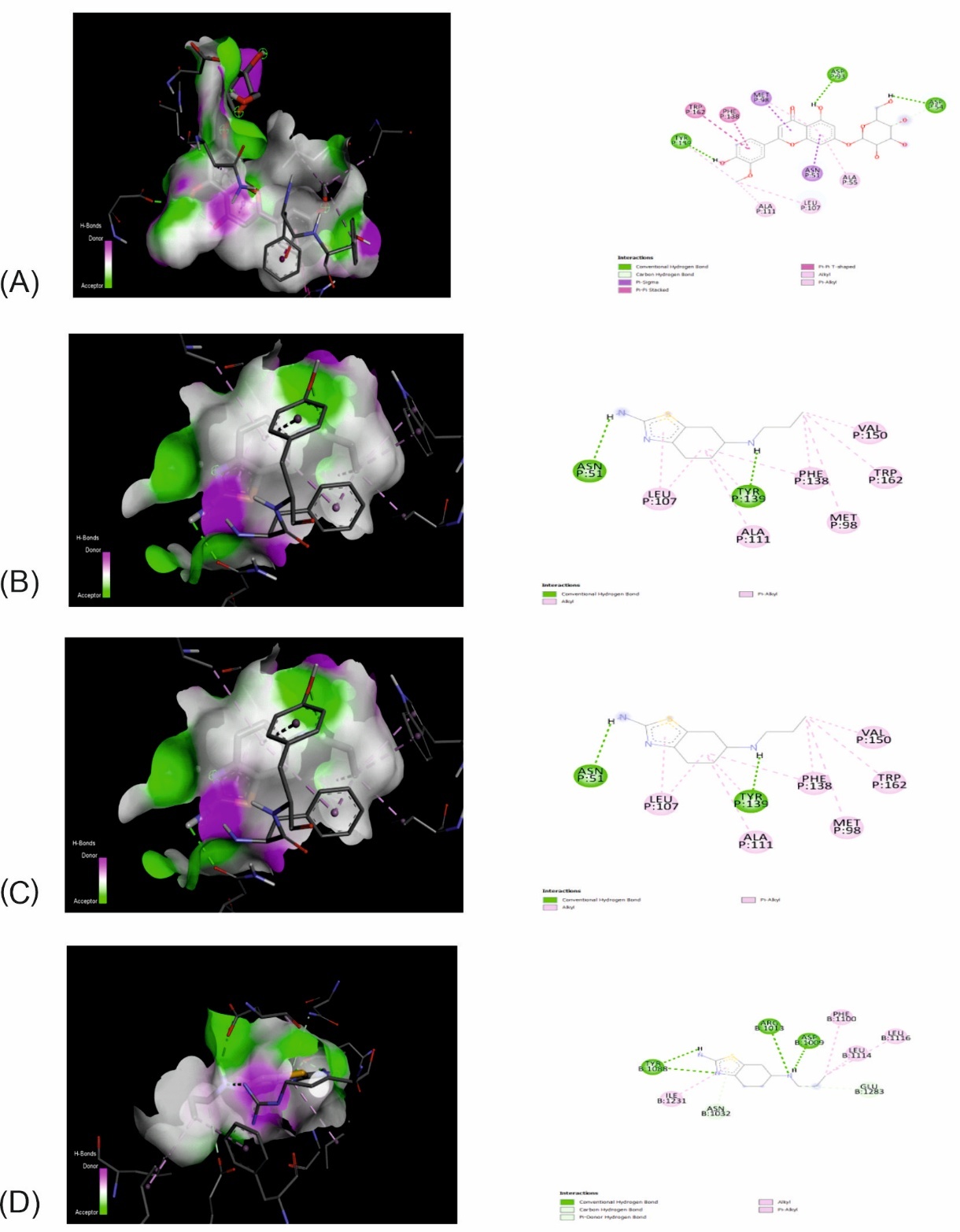
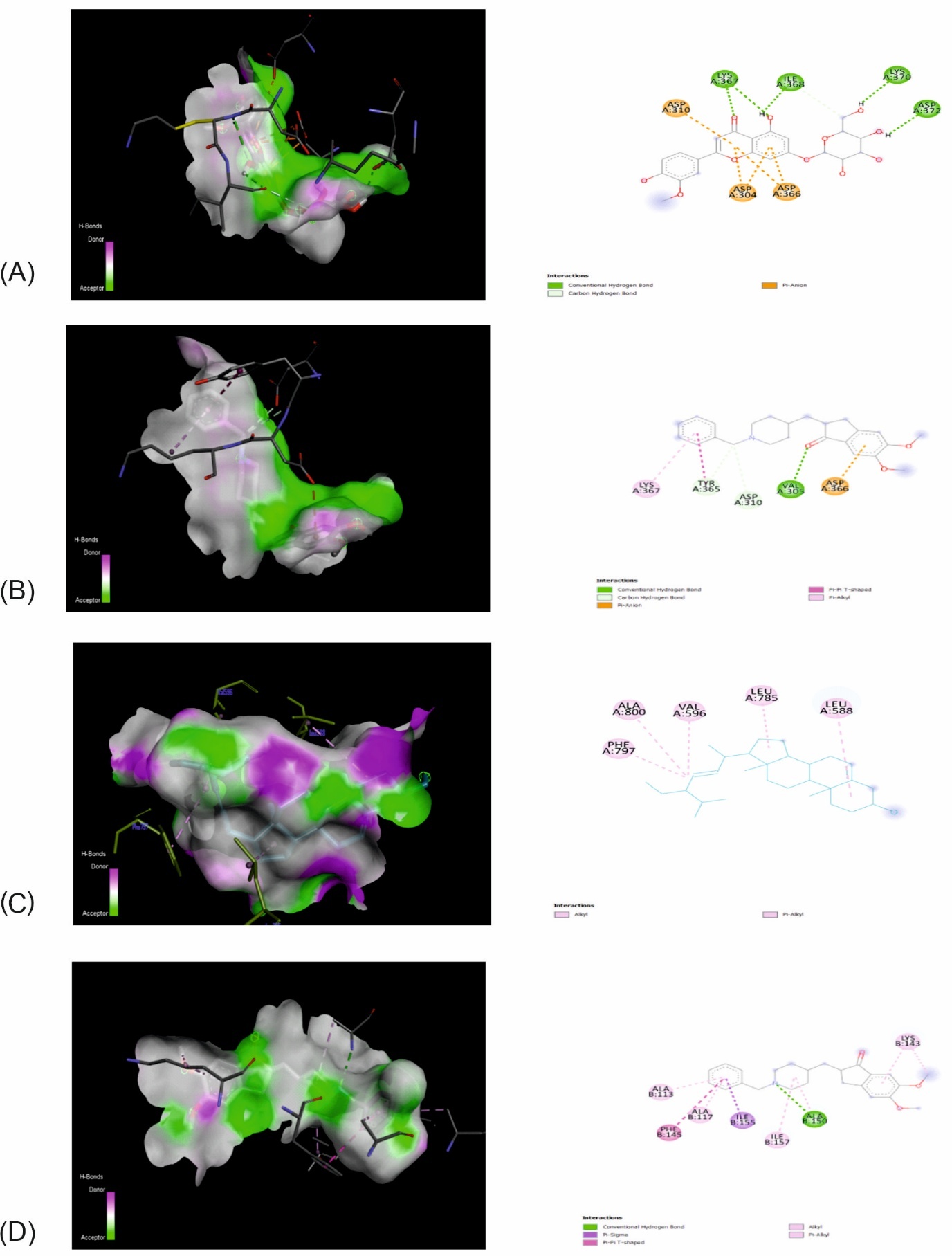
Interactions between Ligands and Target in case of: Parkinson’s disease (Table 6, [Figure 1]: (A), (B), (C), (D)). Alzheimer’s disease (Table 7, [Figure 2]: (A), (B), (C), (D)).
3.3. Prediction of pharmacokinetics (Table 8)
3.3.1. Assessment criteria
H2O solubility: >: very soluble, 0 to -2: soluble, -2 to -4: Moderately soluble, -4 to -6: poorly soluble, < -6: practically insoluble. CaCO2 permeability: > 0.90. Human intestinal absorption: < 30% (Poor absorption). Volume of distribution: < 0.15: Low, > 0.45: High. Total clearance: > 0.7: High CL, 0.3–0.7 Moderate CL, < 0.3: Low CL.
|
Ligands |
Mol. Wt. (g\mol) |
C Log p |
HBA |
HBD |
Rotatable bonds |
TPSA (A 2 ) |
|---|---|---|---|---|---|---|
|
Stigmasterol |
412.69 |
6.98 |
1 |
1 |
5 |
20.23 |
|
sitosterol |
414.71 |
7.24 |
1 |
1 |
6 |
20.23 |
|
P-Coumaric acid |
164.16 |
1.26 |
3 |
2 |
2 |
57.53 |
|
Asparagine |
132.12 |
-2.22 |
4 |
3 |
3 |
106.41 |
|
Quercetin |
302.24 |
1.23 |
7 |
5 |
1 |
131.36 |
|
Vanillin |
152.15 |
1.20 |
3 |
1 |
2 |
46.53 |
|
Chryseriol 7-O- -D glucopyranoside |
462.40 |
0.61 |
11 |
6 |
5 |
179.28 |
|
Ferulic acid |
194.18 |
1.36 |
4 |
2 |
3 |
66.76 |
|
Caffeic acid |
180.16 |
0.93 |
4 |
3 |
2 |
77.76 |
|
Vanillic acid |
168.15 |
1.08 |
4 |
2 |
2 |
66.76 |
|
Scoparone |
206.19 |
1.84 |
4 |
0 |
2 |
48.67 |
|
Luteolin |
286.24 |
1.73 |
6 |
4 |
1 |
111.13 |
|
Chryseriol |
300.26 |
2.18 |
6 |
3 |
2 |
100.13 |
|
Luteolin 7-O- glucoside |
448.38 |
0.15 |
11 |
7 |
4 |
190.28 |
|
Gallic acid |
170.12 |
0.21 |
5 |
4 |
1 |
97.99 |
|
-tocopherol |
192.17 |
1.52 |
4 |
1 |
1 |
59.67 |
|
Scopoletin |
430.17 |
8.29 |
2 |
1 |
12 |
29.46 |
|
Parkinson’s disease |
||||
|---|---|---|---|---|
|
**Ligands** |
**Binding affinity** |
|||
|
**3NMR** |
**5JLV** |
**8OG0** |
**6FFH** |
|
|
Vanillin |
-6.1 |
-5.6 |
-5.0 |
-5.4 |
|
Asparagine |
-4.5 |
-5.1 |
-4.9 |
-5.5 |
|
Gallic acid |
-5.9 |
-5.6 |
-5.2 |
-5.5 |
|
Scoparone |
-7.4 |
-6.2 |
-5.5 |
-5.7 |
|
Vanillic acid |
-6.2 |
-6.2 |
-5.4 |
-5.5 |
|
Alpha – Tocopherol |
-8.3 |
-5.7 |
-6.6 |
-6.8 |
|
Beta – Sitosterol |
-8.5 |
-6.9 |
-7.3 |
-8.2 |
|
Ferulic acid |
-6.9 |
-6.1 |
-5.9 |
-5.9 |
|
P-Coumaric acid |
-6.9 |
-6.3 |
-6.1 |
-5.9 |
|
Caffeic acid |
-6.7 |
-6.6 |
-6.5 |
-6.2 |
|
Quercetin |
-9.4 |
-7.2 |
-7.5 |
-7.7 |
|
Luteolin |
-9.4 |
-7.5 |
-7.8 |
-7.7 |
|
Scopoletin |
-7.2 |
-6.8 |
-6.0 |
-6.4 |
|
Luteolin 7-O-glucoside |
-9.0 |
-7.9 |
-8.7 |
-8.7 |
|
Chryseriol |
-9.4 |
-7.3 |
-7.9 |
-7.7 |
|
Stigmasterol |
-7.4 |
-9.0 |
-8.0 |
-8.5 |
|
Chryseriol-7-O-beta-D-glucopyranoside |
-9.5 |
-7.7 |
-8.7 |
-7.3 |
|
Pramipexole [Standard] |
-6.4 |
-5.6 |
-5.6 |
-5.6 |
|
**Alzheimer’s disease** |
||||
|
**Ligands** |
**Binding affinity** |
|||
|
**4V11** |
**2I0Y** |
**4MD6** |
**7D90** |
|
|
Vanillin |
-5.1 |
-5.9 |
-5.6 |
-6.0 |
|
Asparagine |
-4.5 |
-4.5 |
-4.8 |
-5.5 |
|
Gallic acid |
-5.0 |
-6.2 |
-6.1 |
-6.7 |
|
Scoparone |
-5.7 |
-7.2 |
-6.8 |
-7.8 |
|
Vanillic acid |
-5.2 |
-6.2 |
-6.0 |
-6.6 |
|
Alpha – Tocopherol |
-5.2 |
-7.7 |
-8.5 |
-10.3 |
|
Beta – Sitosterol |
-7.0 |
-9.8 |
-9.6 |
-11.0 |
|
Ferulic acid |
-5.4 |
-6.9 |
-6.7 |
-7.2 |
|
P-Coumaric acid |
-5.4 |
-6.7 |
-6.6 |
-7.2 |
|
Caffeic acid |
-5.8 |
-6.7 |
-6.8 |
-7.3 |
|
Quercetin |
-6.4 |
-9.5 |
-9.4 |
-9.4 |
|
Luteolin |
-6.8 |
-9.2 |
-9.1 |
-10.1 |
|
Scopoletin |
-6.3 |
-7.3 |
-7.0 |
-7.5 |
|
Luteolin 7-O-glucoside |
-6.9 |
-9.2 |
-10.0 |
-10.0 |
|
Chryseriol |
-6.7 |
-8.8 |
-8.7 |
-10.0 |
|
Stigmasterol |
-6.8 |
-10.4 |
-10.1 |
-11.1 |
|
Chryseriol-7-O-beta-D-glucopyranoside |
-7.9 |
-9.4 |
-9.8 |
-10.5 |
|
Donepezil [Standard] |
-6.2 |
-7.2 |
-6.9 |
-11.5 |
|
Parkinson’s disease |
|||
|---|---|---|---|
|
**Ligand** |
**Target** |
**Interacting Amino acids** |
|
|
**Hydrogen bonds** |
**Hydrophobic bonds** |
||
|
Chryseriol-7-O-beta-D- glucopyranoside |
3NMR |
TYR P:139 ASP P:93 ASP P:54 |
TRP P:162 PHE P:138 MET P:98 ASN P:51 ALA P:111 LEU P:107 ALA P:55 |
|
Stigmasterol |
5JLV |
- |
PHE C:557 PRO C:549 PHE C:562 |
|
Luteolin 7-O-glucoside |
8OG0 |
LYS H:44 GLN H:40 TRY L:88 |
PRO H:42 |
|
Luteolin 7-O-glucoside |
6FFH |
ARG A:1096 ALA A:1093 ASN A:1763 ARG A:1762 |
ALA A:1097 ILE A:1003 ASP A:1072 VAL A:1075 |
|
Alzheimer’s disease disease |
|||
|---|---|---|---|
|
**Ligand** |
**Target** |
**Interacting Amino acids** |
|
|
**Hydrogen bonds** |
**Hydrophobic bonds** |
||
|
Chryseriol-7-O-beta-D- glucopyranoside |
4V11 |
LYS A:367 ILE A:368 LYS A:370 ASP A:372 |
ASP A:310 ASP A:304 ASP A:366 |
|
Stigmasterol |
2I0Y |
- |
PHE A:797 ALA A:800 VAL A:596 LEU A:785 LEU A:588 |
|
Stigmasterol |
4MD6 |
TYR A:612 |
LEU A:765 ALA A:779 ALA A:767 VAL A:782 PHE A:820 |
|
Chryseriol-7-O-beta-D- glucopyranoside |
7D90 |
- |
PHE A:297 TYR A:341 PHE A:338 TRP A:286 |
|
Ligands |
Absorption |
Distribution |
Excretion |
|||||
|---|---|---|---|---|---|---|---|---|
|
H2OS |
CaCO2 P |
HIA |
P-g S |
P-g I |
V D |
BBB |
CL |
|
|
Vanillin |
-0.812 |
1.23 |
86.88 |
+ |
- |
-1.88 |
-1.10 |
0.59 |
|
Asparagine |
0.68 |
-0.358 |
41.07 |
+ |
- |
-0.35 |
-0.18 |
0.35 |
|
Gallic acid |
-2.56 |
-0.081 |
43.37 |
- |
- |
-0.27 |
-0.67 |
0.51 |
|
Scoparone |
-1.976 |
1.298 |
97.87 |
- |
- |
-0.34 |
0.17 |
0.79 |
|
Vanillic acid |
-1.838 |
0.33 |
78.15 |
- |
- |
-1.73 |
-0.38 |
0.62 |
|
Alpha – Tocopherol |
-8.048 |
1.274 |
90.51 |
+ |
+ |
0.85 |
0.61 |
0.78 |
|
Beta – Sitosterol |
-7.565 |
1.331 |
92.98 |
+ |
+ |
1.16 |
0.50 |
0.59 |
|
Ferulic acid |
-1.603 |
0.279 |
93.92 |
+ |
- |
-0.85 |
-0.24 |
0.62 |
|
P-Coumaric acid |
-1.52 |
1.205 |
93.92 |
+ |
- |
-0.72 |
-0.23 |
0.68 |
|
Caffeic acid |
-1.223 |
0.228 |
60.25 |
+ |
- |
-0.88 |
-0.73 |
0.53 |
|
Quercetin |
-3.275 |
0.076 |
73.10 |
+ |
- |
-1.13 |
-1.06 |
0.48 |
|
Luteolin |
-3.251 |
0.27 |
79.39 |
+ |
- |
-0.98 |
-0.88 |
0.55 |
|
Scopoletin |
-1.74 |
1.216 |
96.89 |
+ |
- |
-0.50 |
-0.22 |
0.71 |
|
Luteolin 7-O-glucoside |
-3.502 |
-0.484 |
51.49 |
+ |
- |
-1.40 |
-1.49 |
0.59 |
|
Chryseriol |
-3.577 |
0.374 |
84.04 |
- |
- |
-0.95 |
-0.90 |
0.51 |
|
Stigmasterol |
-7.533 |
1.343 |
93.49 |
+ |
+ |
1.12 |
0.47 |
0.58 |
|
Chryseriol-7-O- beta-D- glucopyranoside |
-3.663 |
-0.441 |
56.14 |
+ |
+ |
-1.41 |
-1.51 |
0.64 |
|
Ligands |
Metabolic Isozymes [CYP 450] |
||||||
|---|---|---|---|---|---|---|---|
|
2D6 S |
3A4 S |
1A2 I |
2C19 I |
2C9 I |
2D6 I |
3A4 I |
|
|
Vanillin |
- |
- |
+ |
- |
- |
- |
- |
|
Asparagine |
- |
- |
- |
- |
- |
- |
- |
|
Gallic acid |
- |
- |
- |
- |
- |
- |
- |
|
Scoparone |
- |
- |
+ |
- |
- |
- |
- |
|
Vanillic acid |
- |
- |
- |
- |
- |
- |
- |
|
Alpha – Tocopherol |
- |
+ |
- |
- |
- |
- |
- |
|
Beta – Sitosterol |
- |
+ |
- |
- |
- |
- |
- |
|
Ferulic acid |
- |
- |
- |
- |
- |
- |
- |
|
P-Coumaric acid |
- |
- |
- |
- |
- |
- |
- |
|
Caffeic acid |
- |
- |
- |
- |
- |
- |
- |
|
Quercetin |
- |
- |
+ |
- |
- |
- |
- |
|
Luteolin |
- |
- |
+ |
- |
- |
- |
- |
|
Scopoletin |
- |
- |
+ |
- |
- |
- |
- |
|
Luteolin 7-O-glucoside |
- |
+ |
- |
- |
- |
- |
- |
|
Chryseriol |
- |
- |
+ |
- |
- |
- |
- |
|
Stigmasterol |
- |
+ |
- |
- |
- |
- |
- |
|
Chryseriol-7-O- beta-D- glucopyranoside |
- |
+ |
- |
- |
- |
- |
- |
4. Discussion
Seventeen phytochemicals from the plant Abutilon indicum were retrieved from the literature. By considering the molecule's physical and chemical properties, Lipinski's Rule of Five is a drug development approach that helps determine if a compound is likely to be orally bioavailable. According to the rule, a substance that meets the following requirements has a greater likelihood of being efficiently absorbed and distributed: a molecular weight of less than 500Da, a calculated log P (ClogP) of less than 5, fewer than five hydrogen bond donors, fewer than ten hydrogen bond acceptors, and fewer than ten rotatable bonds. The following ligands have been determined to diverge from Lipinski's Rule of Five based on the criteria: One ClogP violation for stigmasterol, one for β-sitosterol (ClogP), two for Chryseriol 7-O-β-D glucopyranoside (HBA, HBD), two for luteolin 7-O-glucoside (HBA, HBD), and one for Scopoletin (ClogP) from ([Table 4]).
Lipinski's criteria have been fulfilled by most of the studied ligands, including P-Coumaric acid, Asparagine, Quercetin, Vanillin, Ferulic acid, Caffeic acid, Vanillic acid, Scoparone, Luteolin, Chryseriol, Gallic acid, and α-Tocopherol. They can cross the BBB as well. The above features imply that these ligands might have a high oral bioavailability, which is essential for treating CNS diseases systemically. To improve the potential for CNS application, the diverging ligands indicate the necessity of structural modification or other methods of administration (such as intranasal, nanoparticle-based systems).
The conventional medication Pramipexole has a lower binding affinity than a number of natural ligands, according to molecular docking data against Parkinson's disease targets (3NMR, 5JLV, 8OG0, and 6FFH). With a maximal binding affinity of -9.5kcal/mol against 3NMR from Table-6, Chryseriol-7-O-β-D-glucopyranoside has the highest overall binding affinity. Flavonoids such as Luteolin, Chryseriol, and Luteolin 7-O-glucoside, in contrast, also exhibit strong binding ranging from -7.3 to -9.4kcal/mol, suggesting a strong interaction with proteins linked to Parkinson's disease. These findings imply that drugs based on flavonoids might provide improved target interactions in comparison to traditional therapy. Stigmasterol has the highest binding affinity to Alzheimer's disease targets, particularly with 7D90 (-11.1kcal/mol) from ([Table 5]). On the other hand, the most powerful binding affinity is demonstrated by the well-known pharmaceutical donepezil with 7D90 is -11.5kcal/mol. Although donepezil continues to have the highest binding score, a number of natural ligands, such as glycosylated flavonoids and stigmasterol, have similar or slightly lower affinities, indicating considerable possibility.
Compounds such as Scopoletin, Scoparone, and Vanillin exhibit good solubility, Caco-2 permeability, high human intestinal absorption (HIA), and medium to high clearance levels, indicating good oral bioavailability and distribution. Despite their high absorption and BBB permeability, beta-sitosterol and stigmasterol have low solubility (Log S < -6), which may limit their bioavailability from ([Table 8]). Ligands like quercetin, luteolin, and Chryseriol have intermediate solubility and distribution and are P-glycoprotein (P-gp) substrates, which may limit brain entry due to active efflux at the BBB from ([Table 9]). Furthermore, P-gp inhibitors can improve brain transport of co administered medicines, but as a substrate, they may lower CNS exposure, which is critical for neurological conditions. Ligands such as Scoparone, Scopoletin, and Ferulic acid demonstrate potential action due to their adequate solubility, permeation, and elimination.
5. Conclusion
The investigation of 17 plant-based chemicals obtained from Abutilon indicum demonstrates beneficial potential as therapies for Parkinson's and Alzheimer's diseases. Most substances follow Lipinski's Rule of Five, indicating high oral bioavailability and a capability to pass the blood-brain barrier, which is critical for treating CNS ailments. Flavonoids and phytosterols, including Chryseriol-7-O-β-D-glucopyranoside, Luteolin 7-O-glucoside, and Stigmasterol, have high affinity for neurological targets, comparable to conventional medicines donepezil and pramipexole. Compounds such as Scopoletin and Scoparone have positive pharmacokinetic features, implying efficient absorption, distribution, and elimination. But factors such as low solubility or P-gp substrate activity may restrict CNS exposure, necessitating structural changes or other delivery techniques. In addition, CYP450 metabolism plays an important role in modulating ligand clearance and possible medication interactions.
These natural compounds are promising agents, but enhancing solubility, reducing P-gp-mediated efflux, and learning about the mechanisms of metabolism are crucial measures for their effective use as neurotherapeutic agents. Future research should concentrate on structural optimization of robust phytochemicals to improve solubility and CNS bioavailability. In vivo validation, formulation development (e.g., nanoparticles), and CYP450 interaction profiling are required to progress these candidates as possible Parkinson's and Alzheimer's disease therapies, assuring efficacy, safety, and enhanced pharmacokinetic profiles.
6. Author Contribution
Pasumarthy Sree Mahalakshmi: Supervision, writing – original draft, writing – review editing. Thamalapakula VinodKumar: Data curation. Subbireddy Gari Chandra Prakash Reddy: Software. Guduru Sushma: Data curation.
7. Source of Funding
None.
8. Conflict of Interest
None.
9. Acknowledgements
Special acknowledgements given to S. Chandra Prakash Reddy, M. Pavan Kalyan, Hema Jyothsna, P. Angel, Sk. Mehaboob Shareef (B. Pharm Graduates of Narayana Pharmacy College).
References
- Lamptey R, Chaulagain B, Trivedi R, Gothwal A, Layek B, Singh J. A review of the common neurodegenerative disorders: current therapeutic approaches and the potential role of nanotherapeutics. Int. J. Mol. Sci. 2022;23(3). [Google Scholar] [Crossref]
- Ou Z, Pan J, Tang S, Duan D, Yu D, Nong H. Global trends in the incidence, prevalence, and years lived with disability of Parkinson's disease in 204 countries/territories from 1990 to 2019. Front Public Health. 1990;9. [Google Scholar] [Crossref]
- Ow S, Dunstan D. A brief overview of amyloids and Alzheimer's disease. Protein Sci. 2014;23(10):1315-31. [Google Scholar] [Crossref]
- Johns HM. Alzheimer's disease [Internet]. Baltimore: Johns Hopkins Medicine; [cited. 2026. [Google Scholar]
- Lui F, Tsao J. . StatPearls. 2026. [Google Scholar]
- Breijyeh Z, Karaman R. Comprehensive review on Alzheimer’s disease: causes and treatment. Molecules. 2020;25(24). [Google Scholar] [Crossref]
- Dorsey E, Elbaz A, Nichols E, Abbasi N, Abd-Allah F, Abdelalim A. Global, regional, and national burden of Parkinson's disease, 1990–2016: a systematic analysis for the Global Burden of Disease Study 2016. Lancet Neurol. 2016;17(11):939-53. [Google Scholar] [Crossref]
- Yu H, Sun T, He X, Wang Z, Zhao K, An J. Association between Parkinson’s disease and diabetes mellitus: From epidemiology, pathophysiology and prevention to treatment. Aging Dis. 2022;13(6):1591-1605. [Google Scholar] [Crossref]
- Ascherio A, Schwarzschild M. The epidemiology of Parkinson's disease: risk factors and prevention. Lancet Neurol. 2016;15(12):1257-72. [Google Scholar] [Crossref]
- Wen M, Zhou B, Chen Y, Ma Z, Gou Y, Zhang C. Serum uric acid levels in patients with Parkinson’s disease: A meta-analysis. PLoS one. 2017;12(3). [Google Scholar] [Crossref]
- Giguère N, Burke Nanni S, Trudeau L. On cell loss and selective vulnerability of neuronal populations in Parkinson's disease. Front. Neuro. 2018. [Google Scholar] [Crossref]
- Mahalakshmi P. A Review on Biomolecular Mechanisms of Parkinson’s Disease. Int J Biol Pharm Sci Arch. 2021;12(1):10-26. [Google Scholar] [Crossref]
- Váradi C. Clinical features of Parkinson’s disease: the evolution of critical symptoms. Biology (Basel). 2020;9(5). [Google Scholar] [Crossref]
- Stoker T, Barker R. Recent developments in the treatment of Parkinson's Disease. F1000 Res. 2020;9. [Google Scholar] [Crossref]
- Stocchi F, Bravi D, Emmi A, Antonini A. Parkinson disease therapy: current strategies and future research priorities. Nat Rev Neurol. 2024;20(12):695-707. [Google Scholar] [Crossref]
- Agu P, Afiukwa C, Orji O, Ezeh E, Ofoke I, Ogbu C. Molecular docking as a tool for the discovery of molecular targets of nutraceuticals in diseases management. Sci Rep. 2023;13(1). [Google Scholar] [Crossref]
- Suryawanshi V, Umate S. A Review on Phytochemical Constituents of Abutilon indicum (Linn.) Sweet-An Important Medicinal Plant in Ayurveda. Plantae Scientia. 2020;3(3):15-9. [Google Scholar] [Crossref]
- Mohite M, Shelar P, Raje V, Babar S, Sapkal R. Review on Pharmacological Properties of Abutilon indicum. Asian J. Pharm. Res. 2012;2(4):156-60. [Google Scholar] [Crossref]
- Bolleddu R, Venkatesh S, Narasimhaji C. Pharmacognostical and phytochemical studies of Atibala (Abutilon indicum [Linn.] sweet) fruit. AYU. 2021;42(3):138-42. [Google Scholar] [Crossref]
- Srivastava S, Dikshit S, Moharana A, Chaturvedi N, Sharma S, Verma P. Abutilon indicum: Bioactive Compounds and Diverse Therapeutic Applications. Curr Nutraceuticals. 2024;5(1). [Google Scholar] [Crossref]
- Sunil M, Vedavijaya T, Sayana S, Podila K. Phytochemical analysis and antioxidant evaluation of the ethanolic extract of the leaves of Abutilon indicum. Cureus. 2023;15(10). [Google Scholar] [Crossref]
- Das K, Khan M, Namratha N, Swetha R, Gezici S. Comparative phytochemical screening, elemental content and chromatographic evaluation for detection and quantification of polyphenolic compounds for strong antioxidant activity of various extracts of Abutilon indicum (Link) Sweet leaves. Ann. Phytomed. 2019;8(1):36-44. [Google Scholar] [Crossref]
- Mun C, Hui L, Sing L, Karunakaran R, Ravichandran V. Multi-targeted molecular docking, pharmacokinetics, and drug-likeness evaluation of coumarin based compounds targeting proteins involved in development of COVID-19. Saudi J Biol Sci. 2022;29(12). [Google Scholar] [Crossref]
- Daina AMO. & Zoete, V. SwissADME: a free web tool to evaluate pharmacokinetics, drug-likeness and medicinal chemistry friendliness of small molecules. Sci Rep. 2017;7(1). [Google Scholar] [Crossref]
- Abstract
- 1. Introduction
- 2. Materials and Methods
- 3. Results
- 3.1. Molecular docking
- 3.2. Interactions between ligands and target
- 3.3. Prediction of pharmacokinetics (Table 8)
- 4. Discussion
- 5. Conclusion
- 6. Author Contribution
- 7. Source of Funding
- 8. Conflict of Interest
- 9. Acknowledgements
- References
Article Metrics
- Visibility 37 Views
- Downloads 26 Views
- DOI 10.18231/j.ijpp.17180.1781695849
-
CrossMark

- Citation
- Received Date May 02, 2026
- Accepted Date June 04, 2026
- Publication Date August 03, 2026