Indian Journal of Pharmacy and Pharmacology
Indian Journal of Pharmacy and Pharmacology (IJPP) is an open-access, peer-reviewed pharmacy journal, published quarterly, as print and online by the Innovative Education and Scientific Research Foundation (IESRF) since 2014. we will be publishing articles ‘Ahead of Print’ immediately upon acceptance of manuscript. In addition, the journal allows free access (Open Access) to its contents, which is likely to attract more readers and citations to articles published in journal.Manuscripts should be prepared in accordance with the author guidelines of the journal, which follow the recommendations...
Self-medication practices among dental undergraduates: A cross-sectional study

Abstract
Introduction: Self-medication is the selection and use of non-prescribed medicines by individuals’ own initiatives to treat self-recognized illnesses or symptoms. It has been a natural tendency of mankind at all times to relief their discomfort.
Aim: The present study aimed to evaluate the self-medication practices among dental students.
Materials and Methods: A questionnaire study was conducted on 287 dental students from BDS II to BDS IV and interns through questionnaire survey form, self-developed and pre-validated consisting of open and closed-ended questions. Out of which 195 questionnaires were duly filled and analysed.
Results: Among respondents, 50.8% were practicing self-medication. Primary reason for it was fever (67.2%) followed by headache (60.5%) and cold/cough (55.4%). Antibiotics (53.8%) followed by antipyretics (50.8%) are most frequently drugs used. Most common reason not to see a doctor was that they previously have had the symptoms so they already knew what to take (66.2%).
Conclusion: The fact that being a healthcare student was associated with higher medication knowledge, suggesting that medication knowledge might contribute to increase self-medication practices.
1. Introduction
Self-medication is defined as obtaining and consuming drugs without the advice of a doctor either for diagnosis, prescription or surveillance of treatment.[1] Self-medication is often seen as advantageous because it empowers individuals to take an active role in managing their acute health conditions.[2][3] Recently, there has been a growing trend of self-medication, with nonprescription (over-the-counter (OTC)) drugs becoming more widely available in pharmacies and retail stores.[4][5]
Some believe that responsible self-medication can be cost-effective, potentially life-saving in acute situations, and help save time that would otherwise be spent waiting to consult a doctor.[2][6][7] However, responsible self-medication carries certain risks. It can lead to additional health complications and increased out-of-pocket costs, as any negative effects may require professional medical care. Published articles have reported that common over-the-counter (OTC) medications have been associated with adverse health reactions[7] or fatalities.[8][9] Additionally, Hughes et al.,[10] have pointed out that self-medication can sometimes shift to the use of prescription drugs without a prescription or lead to improper drug use, such as misdiagnosis, incorrect dosages, or inappropriate treatment duration. These practices can result in irrational drug use, delayed medical consultation, and an increased risk of side effects and drug interactions.[10][11]
It has been discovered in numerous studies that improper self-medication wastes resources, makes infections more resistant, and generally carries major health risks such unpleasant drug reactions, protracted suffering, and drug dependence. Conversely, when used correctly, self-medication can quickly alleviate urgent medical issues, reduce waiting times for medical attention, be cost-effective, and in certain cases, even save lives.[12] The benefits of responsible self-medication as self-care have been acknowledged for individuals, healthcare practitioners, governments, and the pharmaceutical industry.[10][12]
Self-medication amongst students is a global problem.[11][13][14][15][16][17] Studies in India report a rising incidence.[18][19][20] The students, especially medical and dental undergraduates are more involved in the self-medication practice as they are empowered with good knowledge of drugs, diseases and have greater access to medicine.[21] Recent studies have shown a greater prevalence of self-medication among medical and dental students.[22][23] Since dental students will eventually be prescribing drugs, it's crucial to assess how wisely they're using medications themselves. Their exposure to disease and drug knowledge sets them apart from the general population. With their understanding of common medications and pharmacology taught in their courses, i.e., in BDS II Year, there's a significant risk that dental students might resort to self-medication practices. This research seeks to understand if dental students commonly self-medicate for everyday health issues. There is limited information on how often dental students in India resort to self-medication practices. Thus, the study aims to fill this gap by determining the extent of self-medication practices among dental students.
2. Materials and Methods
During May 2024, research was conducted among the dental students of Himachal Institute of Dental Sciences, Paonta Sahib, Himachal Pradesh, India. The method used to collect responses was a self-designed, online questionnaire google form containing open and closed-ended questions. There were 23 questions in total in the form. The study was approved by Institutional Ethics Committee of Himachal Institute of Dental Sciences, Paonta Sahib, Himachal Pradesh, India (Ref. No. HIDS/PAO/).
Students of BDS II Year to BDS IV Year and interns were included in the study. The link for the questionnaire google form was forwarded to each student during classroom session arranged for the students BDS II Year to BDS IV Year through email. An additional classroom session was scheduled after regular college hours specifically for interns. Prior to answering the questionnaire, the students were provided with a concise overview of the study's purpose and objectives.
The link to the questionnaire was shared with all BDS II to BDS IV Year students and interns, totalling 287 participants. Participation was ensured to be anonymous and voluntary. Clear and appropriate instructions were provided to guide participants on how to fill out the questionnaire effectively. Out of the total, 195 students responded to the questionnaire, while 92 students opted not to participate in the study.
The data obtained was compiled and organized using a Microsoft Excel spreadsheet. Data analysis was done.
3. Results
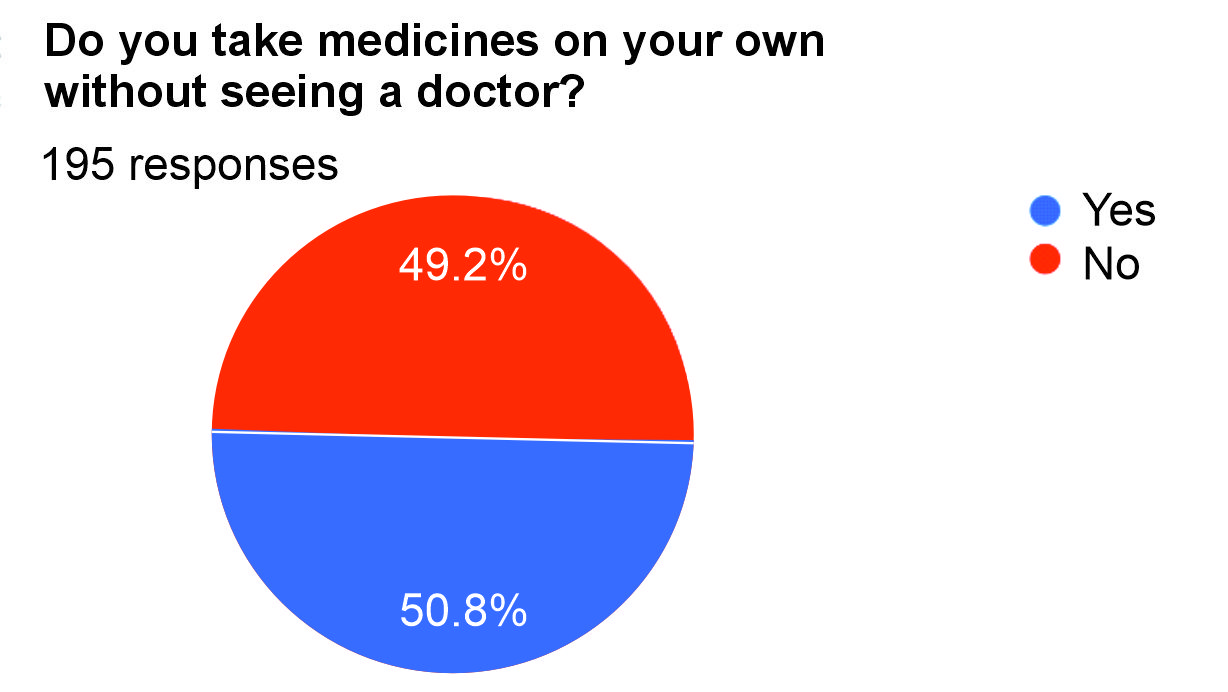
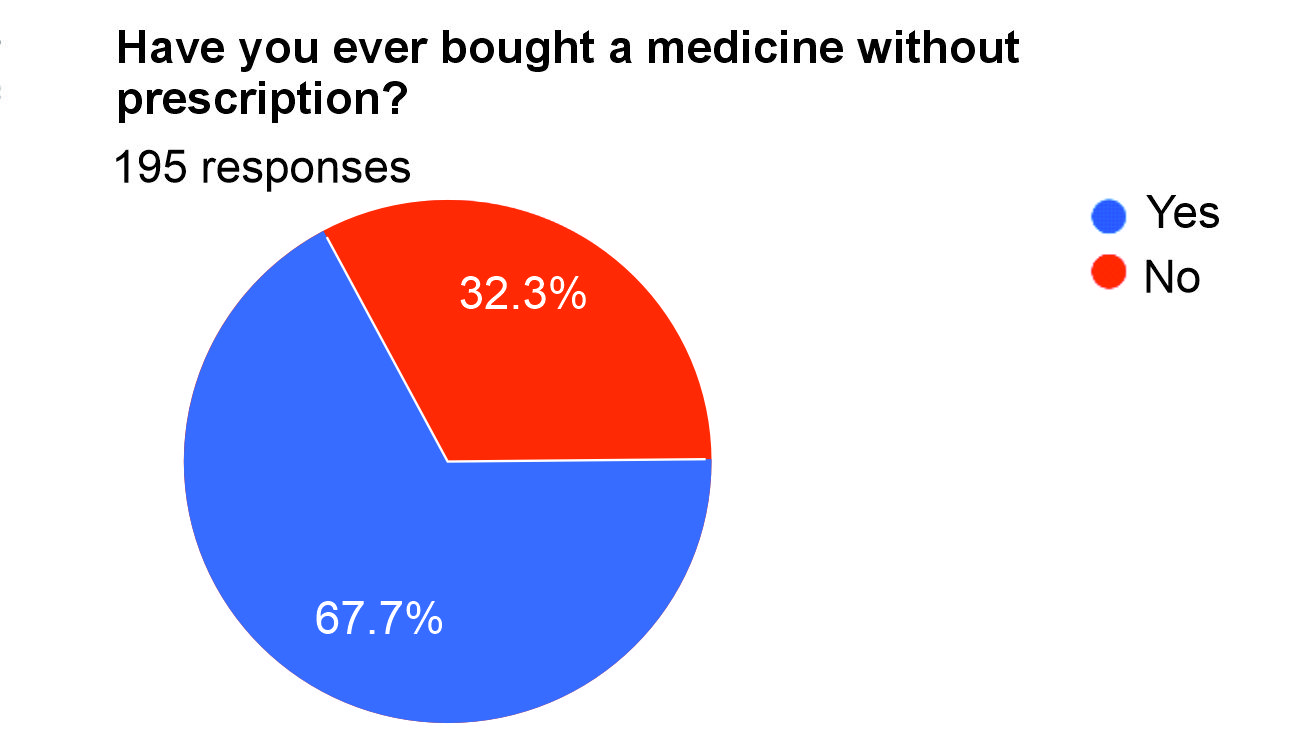
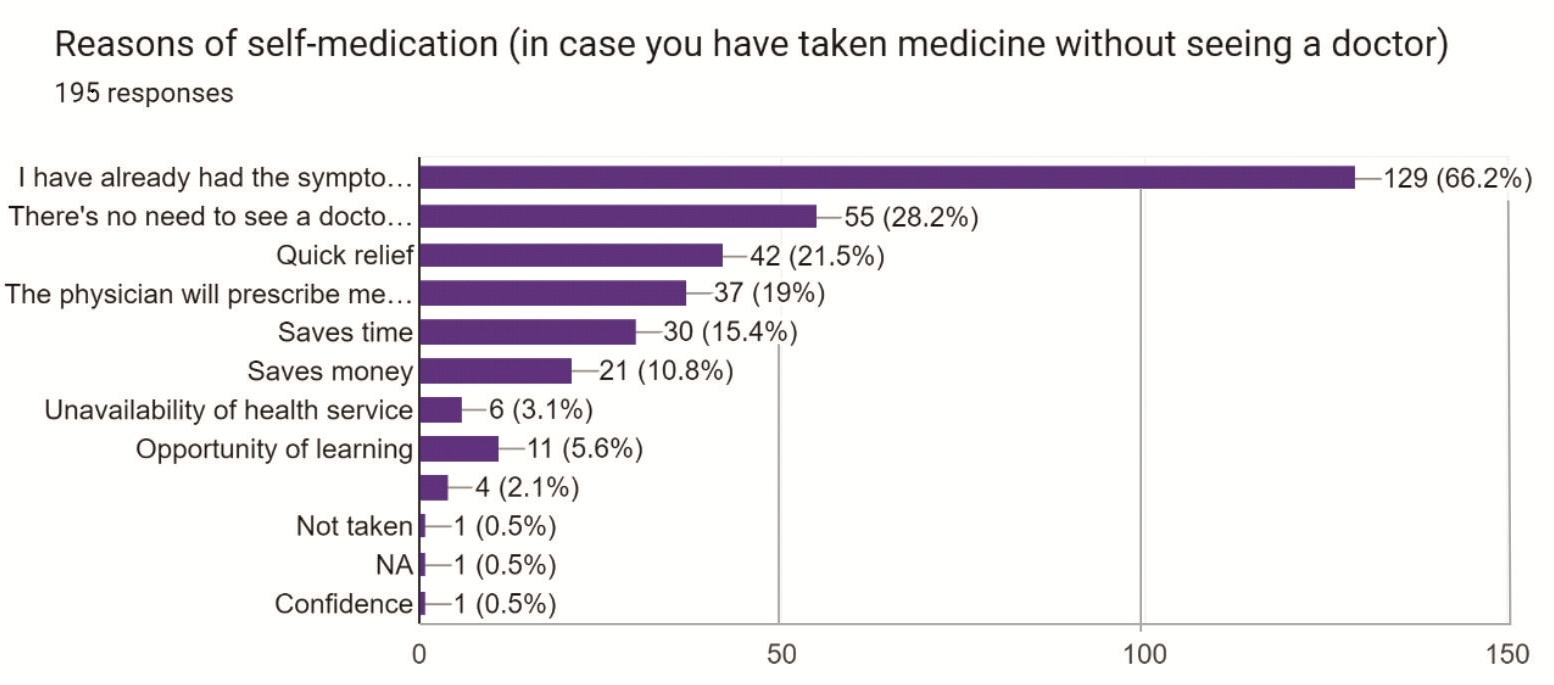
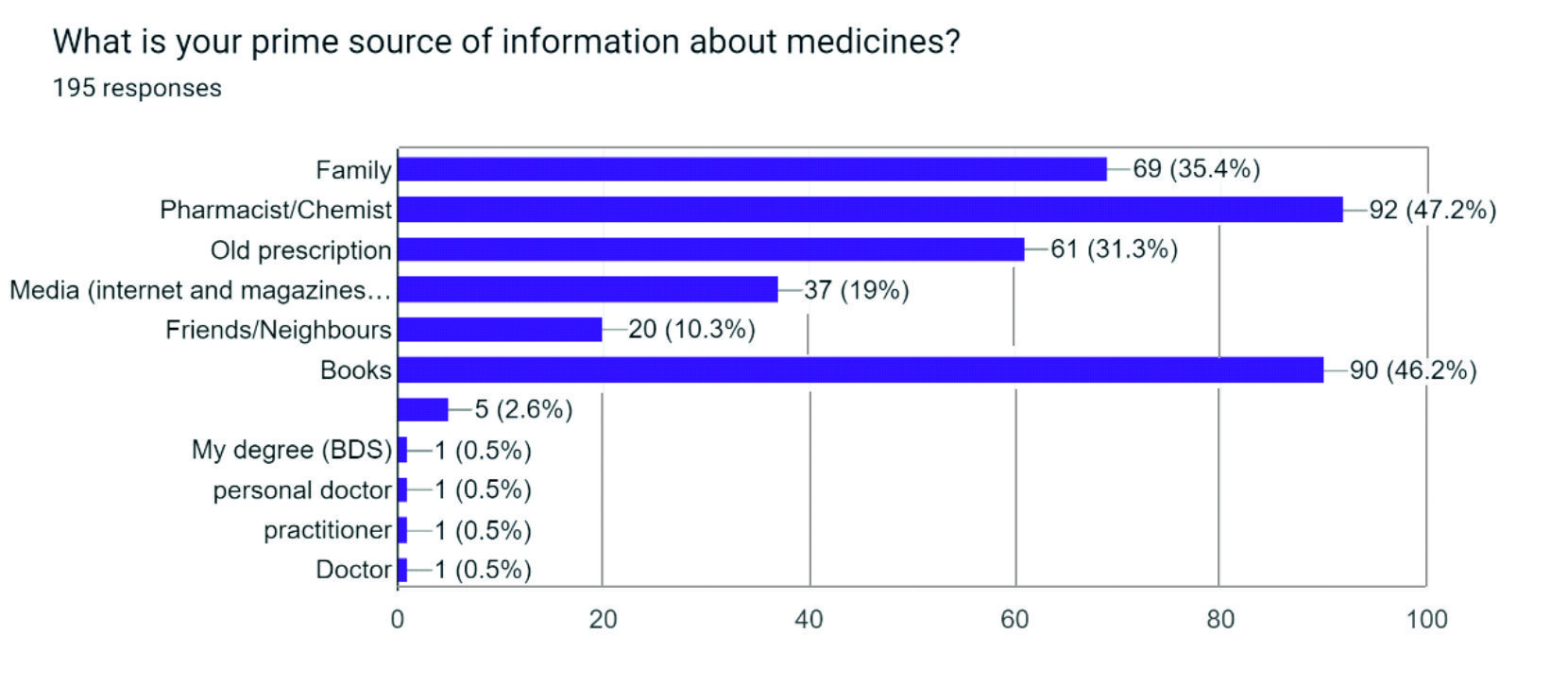
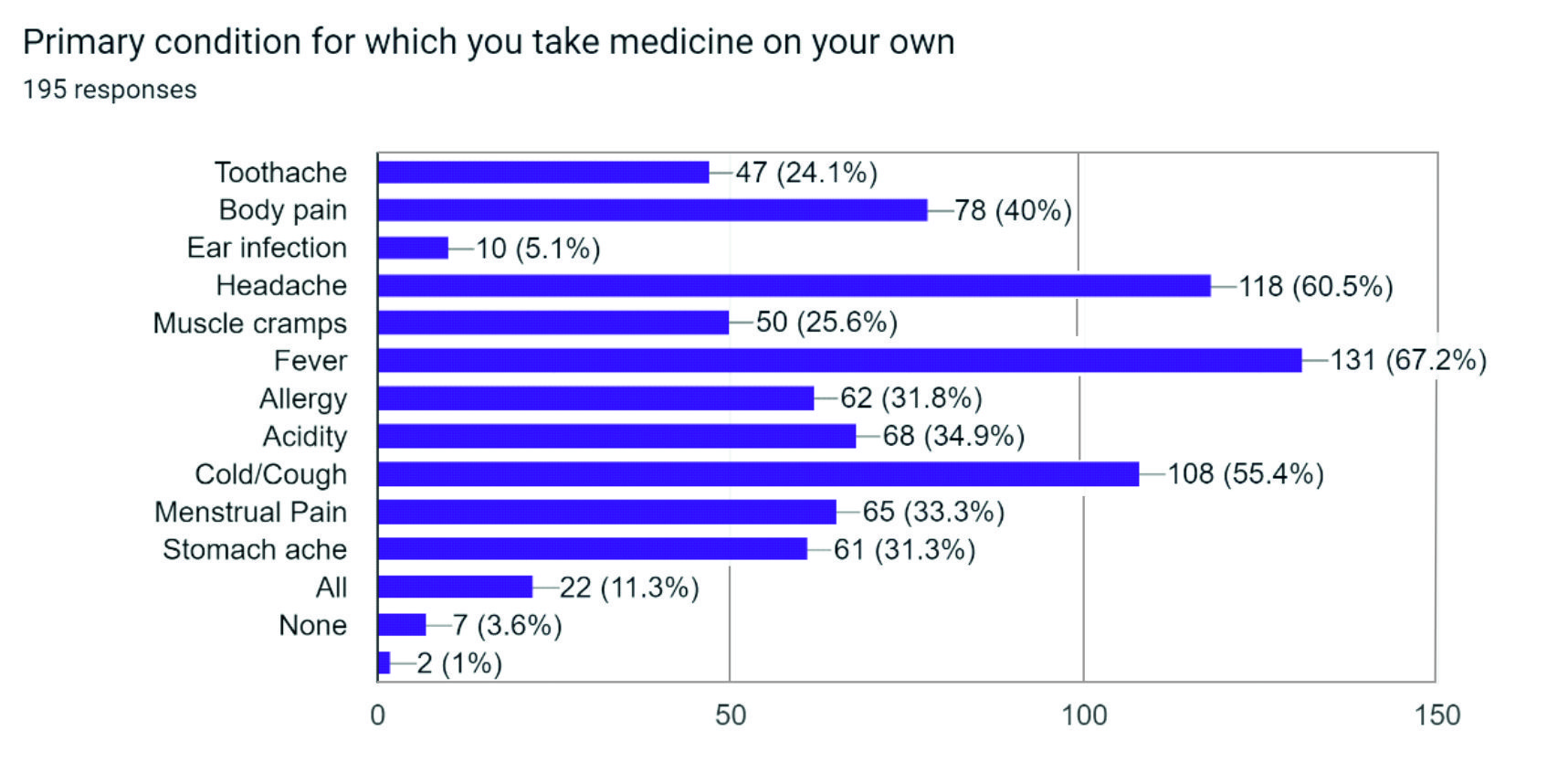
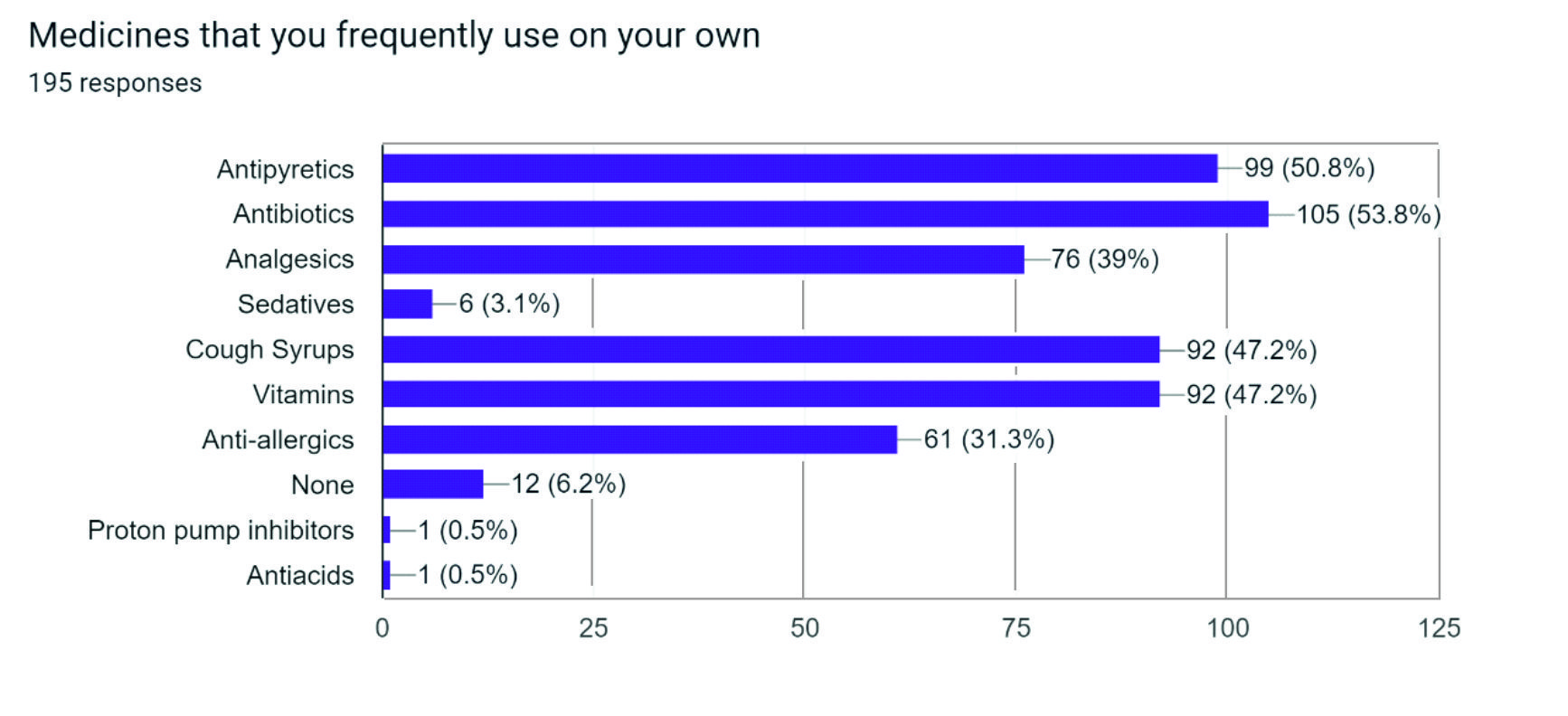
A total of 195 out of 287 students responded to the questionnaire, resulting in a response rate of 67.9%. The respondents were aged 19–26 years, comprising 36 males and 159 females. Regarding the last visit to a physician, 78 (40.0%) participants reported that they had not visited a physician for more than one year, followed by 60 (30.8%) who had visited within the last 1–2 months, and 57 (29.2%) within 2 months to 1 year ([Table 1]). Approximately 50.8% (99/195) of the respondents reported practicing self-medication without consulting a doctor ([Figure 1]). Furthermore, 67.7% (132/195) stated that they had purchased medicines without a prescription ([Figure 2]). The analysis of the type of medicines used revealed that 57.9% of participants preferred branded medicines, whereas 29.7% used generic medicines, and 23.1% were unsure of the type of medicines they used ([Figure 3]). The most common reason for self-medication was that participants had previously experienced similar symptoms and therefore knew what medication to take (66.2%), followed by the belief that there was no need to consult a doctor for a simple illness (28.2%). Other reasons included quick relief, saving time, physician inaccessibility, and lower treatment costs. As respondents could select more than one option, the percentages exceed 100% ([Figure 4]). Regarding sources of information about medicines, pharmacists/chemists (47.2%) were the most frequently reported source, followed by books (46.2%), family members (35.4%), and old prescriptions (31.3%) ([Figure 5]). The most common conditions for which students practiced self-medication were headache (60.5%), cold and cough (55.4%), allergy (35.4%), fever (31.8%), and muscle cramps (25.6%), with participants allowed to choose multiple responses ([Figure 6]). Among the medicines used for self-medication, antibiotics (53.8%) were the most frequently used, followed by antipyretics (50.8%), vitamins (47.2%), cough syrups (47.2%), analgesics (39.0%), and anti-allergic drugs (31.3%). The use of proton pump inhibitors and antacids was comparatively low ([Figure 7]). The practice of self-medication was further analyzed in relation to gender, educational level (BDS I–IV year and internship), distance to the nearest medical store, and the last visit to a physician. Chi-square analysis demonstrated no statistically significant association between self-medication practices and gender, distance to the nearest medical store, or the last physician visit (p > 0.05). However, significant differences were observed according to the year of study (p = 0.011), with students in BDS III year practicing self-medication more frequently than those in other academic years. Additionally, BDS II year, BDS IV year, and interns demonstrated significantly greater knowledge regarding drug interactions than BDS I year students (p < 0.001).
[Figure 6] shows that the top reasons for self-medication practices among students were fever (67.2%), followed by headache (60.5%) and colds/cough (55.4%). [Figure 7] indicates the most frequently used medicines for self-medication practices. The medicines most often used were antibiotics (53.8%), followed closely by antipyretics (50.8%), vitamins (47.2%) and cough syrups (47.2%).
|
Frequency |
|
|---|---|
|
**Gender** |
|
|
Male |
36 (18.5%) |
|
Female |
159 (81.5%) |
|
**Year of Education** |
|
|
BDS II |
54 (27.7%) |
|
BDS III |
55 (28.2%) |
|
BDS IV |
47 (24.1%) |
|
INTERNS |
39 (20%) |
|
**Distance to Nearest Medical Store** |
|
|
< 1KM |
13 (6.7%) |
|
> 1KM |
182 (93.3%) |
|
**Last visit to a Physician** |
|
|
1–2 Months |
60 (30.8%) |
|
2 Months to 1 Year |
57 (29.2%) |
|
More than 1 Year |
78 (40%) |
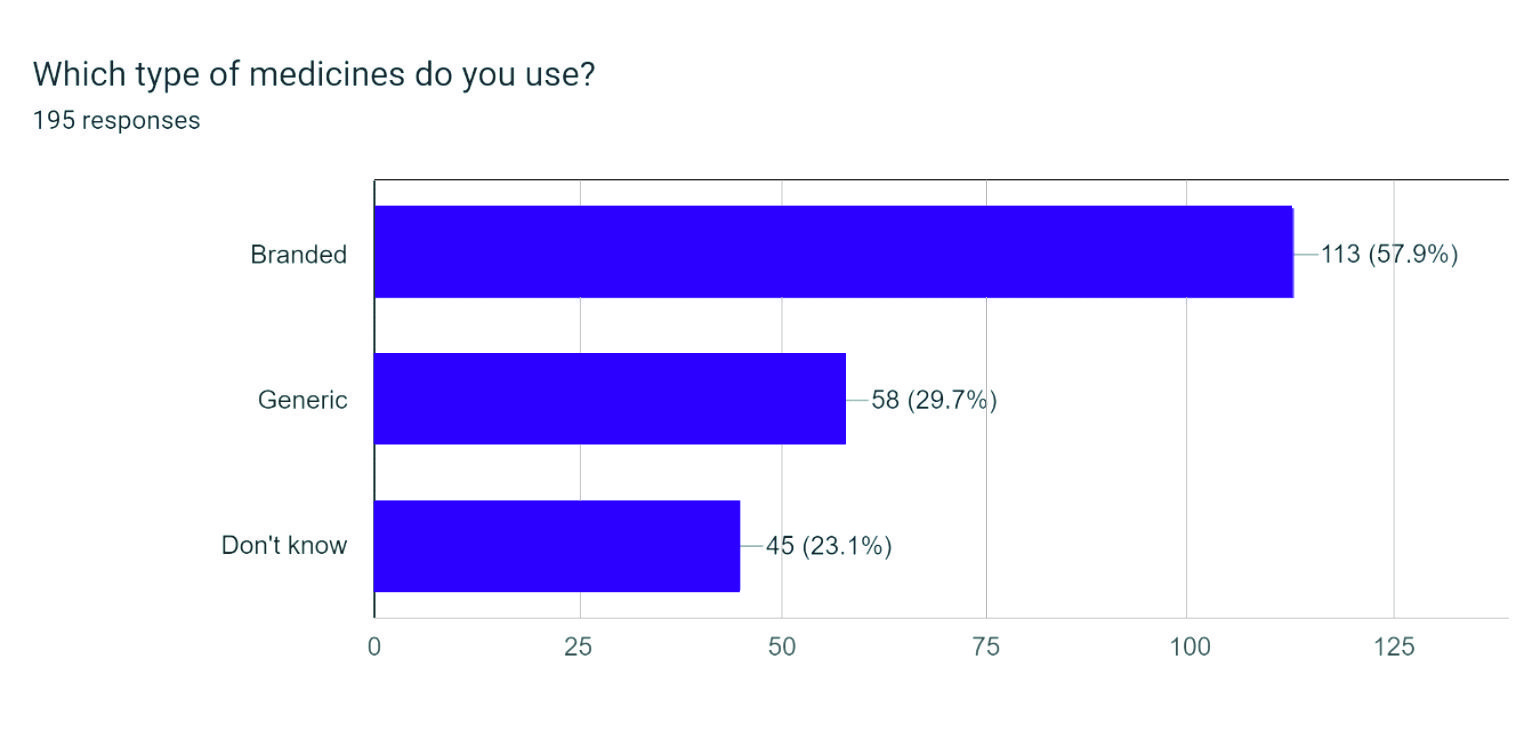
The practice of self-medication was analyzed in relation to various factors, including age, gender, education level (BDS I–IV year and internship), the distance to a nearest medical store, the last visit to a physician and type of medicine. This analysis was conducted using the Chi-square test to determine any significant associations. The analysis found no statistically significant differences in self-medication practices on comparing age, gender, the distance to a nearest medical store and the last visit to a physician (p-value > 0.05). More participants in BDS III year used generic medicines compared to BDS I year (p = 0.011), participants in BDS III year, BDS IV year and internship knew more about drug interactions than BDS II year (p < 0.001).
4. Discussion
This study reveals that 50.8% of dental students engage in self-medication, which is consistent with the study conducted in 40.9% in Pune[4], 57.05% in West Bengal[18], 65% in Kolkata.[24] The respondents' higher educational and literacy levels may contribute to this lower rate, suggesting they are more informed about the potential risks of self-medication. Our findings for the prevalence were lower as compared to other studies: 98% prevalence in Palestine,[11] 83.3% in Kathmandu[25] and 76.9% in Bahrain.[26] These consistent results across various populations indicate a widespread practice of self-medication, highlighting the need for educational interventions to address its potential risks and promote responsible health-seeking behaviors among students. However, a direct comparison of percentages is challenging because the cited studies primarily involved medical students and healthcare professionals. There is limited data available specifically from studies focusing on dental students, making it difficult to draw robust conclusions about self-medication practices across these different groups. More research is needed within the dental student population to better understand their self-medication behaviors and to enable more accurate comparisons.
The age of study participants ranged from 19–26 years. Notably, the study found no gender-based differences in the practice of self-medication, indicating that both male and female dental students equally engaged in the habit of taking medications independently. This suggests that self-medication is a prevalent behaviour among dental students, regardless of gender.
53.8% of individuals in this survey reported using antibiotics as their most common medication. Similar findings were reported in research carried out in China by Pan et al., which reported a prevalence of 47.8%.[27] This underscores a significant tendency among dental students to self-medicate with antibiotics, raising concerns about potential misuse as antibiotic abuse not only leads to wastage of medical resources, but also contributes to the emergence of multi-drug resistant pathogens.[27][28][29] In comparison to this study, lower rates of antibiotic use were reported in other regions, with 21.2% in North India[12] and 19.9% in Palestine[11] Additionally, Abay and Amelo[30] reported a notably low usage rate of 4.8%.
Our findings show that the second most frequently used drug among participants was antipyretics, with a prevalence of 50.8%. This is consistent with findings from studies by James et al.,[26] which indicated that paracetamol was frequently used for self-medication. In Western Nepal, Shankar et al.,[31] reported that paracetamol was the most commonly used drug at 43%, followed by other analgesics at 23%. These similarities reinforce the prevalence of antipyretics like paracetamol in self-medication practices across different regions.
As observed in this study, fever was the major indication for self-medication, reported by 67.2% of participants, followed by headache at 60.5% and cold/cough at 55.4%. Fever was a common indication for self-medication in other studies.[24][32][33]
The most common reason for not seeing a doctor was that participants had previously experienced the symptoms and knew what to "take," with 66.2% citing this reason. This was followed by 28.2% who believed there was no need to see a doctor for a simple disease. Previous studies have indicated that saving time and reducing costs are also common motivations for self-medication,[34] highlighting the various factors that influence individuals’ decisions to manage their health independently.
The main sources of information about medicines in this study were pharmacists/chemists (47.2%), followed closely by books (46.2%) and family (35.4%). In a study by Gutema et al.,[35] self-decision was the primary guiding source at 64%, with family and friends at 31.25%, media and reading materials at 14.1%, and pharmacists at 9.4%. In contrast, a study involving Gondar University students found that reading materials were the major source of information, accounting for 30.5%.[30] The practice of self-medication needs to be founded in reliable medical information; otherwise, drug abuse can lead to resource waste, heightened pathogen resistance, and major health risks such drug side effects and extended illness rates. Although the use of media, such as television and the internet, for obtaining information about drugs was low in our study (19%), there is still a need for strict regulations regarding pharmaceutical advertising aimed at the youth. Ensuring that young individuals are not exposed to misleading or inappropriate advertising is essential to promote safe and informed medication practices.
In this study, 89.7% of students stored medicines at hostel/room. The presence of home pharmacy is associated with self-medication as storage of medication at home with free access, and easy visualization of the products is a risk factor for self-medication.[36]
This study has several limitations. The data were collected exclusively from students at Himachal Institute of Dental Sciences in Paonta Sahib, making it difficult to generalize the findings to a broader population. Additionally, self-reported data may be subject to recall bias, potentially leading to under- or over-reporting of self-medication practices. There may also be mutual influence among students that could affect their responses. Furthermore, the study did not include data from students with chronic diseases, which are often more closely associated with self-medication behaviors.
5. Conclusion
The majority of students engaged in the practice of self-medication, despite having inadequate knowledge about its benefits and risks. This behaviour is particularly common for treating clinical conditions that are perceived as simple or those that the students have previously experienced. This underscores the need for enhanced education on safe self-medication practices to better inform students about potential risks and promote responsible health management.
6. Authors Contribution
Dr. Sahil Gupta: Data curation, investigation, methodology, project administration, supervision. Dr. Mukesh Kumar: Investigation, supervision. Dr. Geetika Gupta: Conceptualization, resources. Dr. Priya Verma: Formal analysis. Dr. Mahvish Iftkhar: Formal analysis. Dr. Sagarika Surya: Data curation, writing – review editing.
7. Source of Funding
None.
8. Conflict of Interest
None.
9. Ethical Approval
The study was approved by Institutional Ethics Committee of Himachal Institute of Dental Sciences, Paonta Sahib, Himachal Pradesh, India (Ref. No. HIDS/PAO/).
References
- Montastruc J, Bagheri H, Geraud T, Lapeyre-Mestre M. Pharmacovigilance of self-medication. Therapie. 1997;52(2):105-10. [Google Scholar]
- Ehigiator O, Azodo C, Ehizele A, Ezeja E, Ehigiator L, Madukwe I. Self-medication practices among dental, midwifery and nursing students. Eur J Gen Den. 2013;2(1):54-7. [Google Scholar] [Crossref]
- Clavijo H, Baquero J, Ulloa S, Morales A. Self-medication during pregnancy. World Health Forum. 1995;16(4):403-4. [Google Scholar]
- Kalra D, Kini P, Kalra R, Jathanna V. Assessment of self-medication among dental students in Pune city, Maharashtra: A cross-sectional survey. J Indian Assoc Public Health Dent. 2015;13(3):318-23. [Google Scholar] [Crossref]
- Ali A, Kion Kai J, Keat C, Dhanaraj S. Self-medication practices among health care professionals in a Private University, Malaysia. Int Curr Pharm J. 2012;1(10):302-10. [Google Scholar] [Crossref]
- . . . 1995. [Google Scholar]
- Kiyingi K, Lauwo J. Drugs in the home: Danger and waste. World Health Forum. 1993;14(4):381-4. [Google Scholar]
- Stevenson RMR, Harmse J, Wilson E. Mortality during the winter flu epidemic-two cases of death associated with self-mediation. Scott Med J. 2001;46(3):84-86. [Google Scholar] [Crossref]
- Schabitz W, Berger C, Knauth M, Meinck H, Steiner T. Hypoxic brain damage after intramuscular self-injection of diclofenac for acute back pain. Eur J Anaesthesiol. 2001;18(11):763-5. [Google Scholar] [Crossref]
- Hughes C, McElnay J, Fleming G. Benefits and risks of self-medication. Drug Saf. 2001;24(14):1027-37. [Google Scholar] [Crossref]
- Sawalha A. Assessment of self-medication practice among university students in Palestine: Therapeutic and toxicity implications. IUG J Nat Stud. 2007;15(2):67-82. [Google Scholar]
- Parakh R, Kohli S, Kulshreshtha S, Advani U, Kumar BSpamsiatcmciNI. Available from: https://www.cabidigitallibrary.org/doi/full/10.5555/20123319292. Int J Pharm Res Bio-Sci. 2012. [Google Scholar] [Crossref]
- James H, Handu S, Khaja K, Sequeira R. Influence of medical training on self – medication by students. Int J Clin Pharmacol Ther. 2008;46(1):23-9. [Google Scholar] [Crossref]
- Zafar S, Syed R, Waqar S, Zubairi A, Vaqar T, Shaikh M. Self-medication amongst university students of Karachi: prevalence, knowledge and attitudes. J Pak Med Assoc. 2008;58(4):214-7. [Google Scholar]
- Correa da Silva M, Soares MCF MA. Self-medication in university students from the city of Rio Grande, Brazil. BMC Public Health. 2012. [Google Scholar] [Crossref]
- ElEzz N, Ezz-Elarab H. Knowledge, attitude and practice of medical students towards self medication at Ain Shams University,. Egypt. J Prev Med Hyg. 2011;52(4):196-200. [Google Scholar]
- Sarahroodi S, Maleki-Jamshid A, Sawalha A, Mikaili P, Safaeian L. Pattern of self –medication with analgesics among Iranian University students in central Iran. J Family Community Med. 2012;19(2):125-9. [Google Scholar] [Crossref]
- Banerjee I, Bhadury T. Self-medication practice among undergraduate medical students in a tertiary care medical college, West Bengal. J Postgrad Med. 2012;58(2):127-31. [Google Scholar] [Crossref]
- Badiger S, Kundapur R, Jain A, Kumar A, Pattanshetty S, Thakolkaran N. Self- medication patterns among medical students in South India. Australas Med J. 2012;5(4):217-20. [Google Scholar] [Crossref]
- Sontakke S, Bajait C, Pimpalkhute S, Jaiswal K, Jaiswal S. Comparative study of evaluation of self medication practices in first and third year medical students. Int J Biol Med Res. 2011;2(2):561-4. [Google Scholar]
- Gyawali S, Shankar P, Poudel P, Saha A. Knowledge, attitude and practice of self-medicaion among basic science undergraduate medical students in a medical school in western Nepal. J Clin Diagn Res. 2015. [Google Scholar] [Crossref]
- Karmacharya A, Uprety B, Pathiyil R, Gyawali S. Knowledge and Practice of Self-medication among Undergraduate Medical Students. J Lumbini Med Coll. 2018;6(1):21-6. [Google Scholar] [Crossref]
- Patil SB SVB, Santoshkumar J, Binjawadgi A, Kanaki A. Self-medication practice and perceptions among undergraduate medical students: a cross sectional study. J Clin Diagn Res. 2014. [Google Scholar] [Crossref]
- Pal J, Ahmad S, Pal P, Chatterjee D. Prevalence and pattern of self-medication among undergraduate students in a medical college of Kolkata. Int J Community Med Public Health. 2017;4(10). [Google Scholar] [Crossref]
- Shrestha A, Madhikarmi N. Prevalence of Self Medication Practice among Dental Undergraduates in a Dental college. JNMA J Nepal Med Assoc. 2020;58(221):20-23. [Google Scholar] [Crossref]
- James H, Handu S, Al Khaja K, Otoom S, Sequeira R. Evaluation of the knowledge, attitude and practice of self-medication among first-year medical students. Med Princ Pract. 2006;15(4):270-5. [Google Scholar] [Crossref]
- Pan H, Cui B, Zhang D, Farrar J, Law F, Ba-Thein W. Prior knowledge, older age, and higher allowance are risk factors for self-medication with antibiotics among university students in southern China. PLoS One. 2012;7(7). [Google Scholar] [Crossref]
- Bi P, Tong S, Parton K. Family self-medication and antibiotics abuse for children and juveniles in a Chinese city. Soc Sci Med. 2000;50(10):1445-50. [Google Scholar] [Crossref]
- Goossens H, Ferech M, Stichele R, Elseviers M. Outpatient antibiotic use in Europe and association with resistance: a cross-national database study. Lancet. 2005;365(9459):579-87. [Google Scholar] [Crossref]
- Abay S, Amelo W. Assessment of self-medication practices among medical, pharmacy, health science students in Gondar University,. Ethiopia. J Young Pharma. 2010;2(3):306-10. [Google Scholar] [Crossref]
- Shankar P, Partha P, Shenoy N. Self-medication and non-doctor prescription practices in Pokhara valley, Western Nepal: A questionnaire-based study. BMC Fam Pract. 2002;3(1). [Google Scholar] [Crossref]
- Kasulkar A, Gupta M. Self medication practices among medical students of a private institute. Indian J Pharm Sci. 2015;77(2):178-82. [Google Scholar] [Crossref]
- Kumar N, Kanchan T, Unnikrishnan B, Rekha T, Mithra P, Kulkarni V. Perceptions and practices of self-medication among medical students in Coastal South India. PLoS One. 2013;8(8). [Google Scholar] [Crossref]
- López J, Dennis R, Moscoso S. A study of self-medication in a neighborhood in Bogotá. Rev Salud Publica (Bogota). 2009;11(3):432-42. [Google Scholar] [Crossref]
- Gutema G, Gadisa D, Kidanemariam Z, Berhe D, Berhe A, Hadera M. Self-medication practices among health sciences students: The case of Mekelle University. J Appl Pharm Sci. 2011;1(10):183-9. [Google Scholar]
- Aditya S. Self-medication among dental undergraduate students: A growing concern. Int J Pharm Sci Res. 2013;4(4):1460-5. [Google Scholar] [Crossref]
Article Metrics
- Visibility 43 Views
- Downloads 27 Views
- DOI 10.18231/j.ijpp.18455.1785217110
-
CrossMark

- Citation
- Received Date June 10, 2026
- Accepted Date July 14, 2026
- Publication Date August 03, 2026