The Pharmacist
The Pharmacist (Pharmacist) is an open-access, peer-reviewed pharmacy journal, published half-yearly, as print and online by the The Pharmacist (Pharmacist) since 2025. With the aim of faster and better dissemination of knowledge, we will be publishing articles ‘Ahead of Print’ immediately upon acceptance of manuscript. In addition, the journal allows free access (Open Access) to its contents, which is likely to attract more readers and citations to articles published in journal. Manuscripts should be prepared in accordance with the author guidelines of the journal, w...
Prunus dulcis: Nutritional composition and implications for human health
Almonds (Prunus dulcis Mill.), a member of the Rosaceae family, are widely consumed for their nutrient density and health-promoting properties. Comprehensive compositional analyses show that almond kernels contain a balanced mix of macronutrients (healthy fatty acids, proteins, carbohydrates) and micronutrients (vitamins, minerals), together with diverse bioactive phytochemicals and amino acids. Kernel nutritional profile and quality are shaped by genetic and environmental factors, underscoring the need to understand how cultivar, climate, soil, and agronomic practices influence composition. Epidemiological and clinical evidence links regular almond consumption to multiple health benefits, including improved glycemic control, favorable lipid and uric acid profiles, body weight management, and reduced risk of metabolic disorders such as type 2 diabetes, obesity, metabolic syndrome, and cardiovascular disease. Emerging data also indicate prebiotic effects that support gut health. This review synthesizes current knowledge on almond composition, summarizes evidence for cardiometabolic and gut-health benefits, and discusses key genetic and environmental determinants of kernel quality.
1. Introduction
Almonds (Prunus dulcis Mill.), belonging to the Rosaceae family, are among the most widely consumed tree nuts worldwide and have been integral components of Mediterranean and Middle Eastern diets for centuries. In recent decades, almonds have gained increasing scientific and commercial interest due to their exceptional nutritional value and potential role in promoting human health. Growing evidence from epidemiological, clinical, and mechanistic studies suggests that regular almond consumption contributes to the prevention and management of several chronic diseases, particularly cardiometabolic disorders, obesity, and type 2 diabetes.[1][2] These findings have positioned almonds as an important functional food with applications extending beyond basic nutrition.
The nutritional significance of almonds is attributed to their unique composition, which includes a favorable profile of unsaturated fatty acids, high-quality plant proteins, dietary fiber, essential vitamins and minerals, and a diverse range of bioactive phytochemicals. Together, these constituents contribute to antioxidant, anti-inflammatory, lipid-lowering, and metabolic regulatory activities. Emerging research has also highlighted the potential prebiotic properties of almonds, suggesting that their beneficial effects may be partially mediated through modulation of the gut microbiota and its metabolites.[3][4]
Despite extensive research on the health benefits of almonds, considerable variability exists in their nutritional composition. Factors such as cultivar, genetic background, rootstock selection, geographical location, climatic conditions, soil characteristics, irrigation practices, harvest maturity, and post-harvest processing can significantly influence kernel quality and bioactive constituent content. These variations not only affect nutritional value but may also alter the biological activities and health outcomes associated with almond consumption. Understanding the influence of these factors is therefore essential for optimizing almond production, ensuring product quality, and accurately interpreting findings from nutritional and clinical studies.[5]
Accumulating clinical evidence demonstrates that almond consumption is associated with improvements in glycemic control, lipid metabolism, body weight regulation, and cardiovascular health. Furthermore, recent studies indicate beneficial effects on gut microbial composition, inflammation, oxidative stress, and other physiological processes involved in chronic disease development. However, important knowledge gaps remain regarding the specific contributions of individual almond constituents, the mechanisms underlying their biological effects, and the extent to which genetic and environmental factors influence their health-promoting properties.[6][7]
Although several reviews have examined either the nutritional composition or health benefits of almonds, a comprehensive synthesis integrating compositional characteristics, determinants of kernel quality, and evidence-based health outcomes remains limited. Addressing these aspects collectively is important for developing a holistic understanding of almonds as functional foods and for identifying strategies to maximize their nutritional and therapeutic potential.
Therefore, the present review provides a comprehensive overview of the nutritional composition of almonds, the genetic and environmental factors influencing kernel quality, and the current evidence supporting their health benefits. Particular emphasis is placed on cardiometabolic health, body weight management, gut microbiota modulation, and emerging therapeutic applications. In addition, current challenges, research gaps, and future directions are discussed to facilitate the development of evidence-based dietary recommendations and sustainable production practices that maximize the health benefits of almond consumption
2. Composition and Nutritional Profile of Almond Kernels
Almond kernels (Prunus dulcis) are nutritionally dense, comprising approximately 50–56% fat, 20–25% protein, 12–18% carbohydrates, and 10–12% dietary fiber per 100 g. The lipid fraction is predominantly unsaturated, with oleic acid (C18:1) accounting for 60–70% of total fatty acids, followed by linoleic acid (C18:2, ~15–20%) and palmitic acid (C16:0, ~6–8%). This favorable fatty acid profile supports cardiovascular health by modulating serum lipids. Almond protein is rich in essential amino acids, particularly arginine, leucine, and phenylalanine, with a digestibility comparable to other plant proteins.[8][9]
Carbohydrates in almonds are low relative to fat and protein, consisting mainly of simple sugars (glucose, fructose, sucrose) and complex polysaccharides. The fiber content includes both soluble (e.g., pectin-like fractions) and insoluble cellulose and hemicellulose, contributing to bowel health and prebiotic effects. Almonds are exceptionally rich in vitamin E, primarily as α-tocopherol (12–25 mg/100 g), a potent antioxidant protecting lipids from oxidation. Significant micronutrient content includes magnesium (250–280 mg/100 g), potassium (700–800 mg/100 g), calcium (240–270 mg/100 g), phosphorus (450–500 mg/100 g), and trace minerals such as iron, zinc, and copper.[3][9]
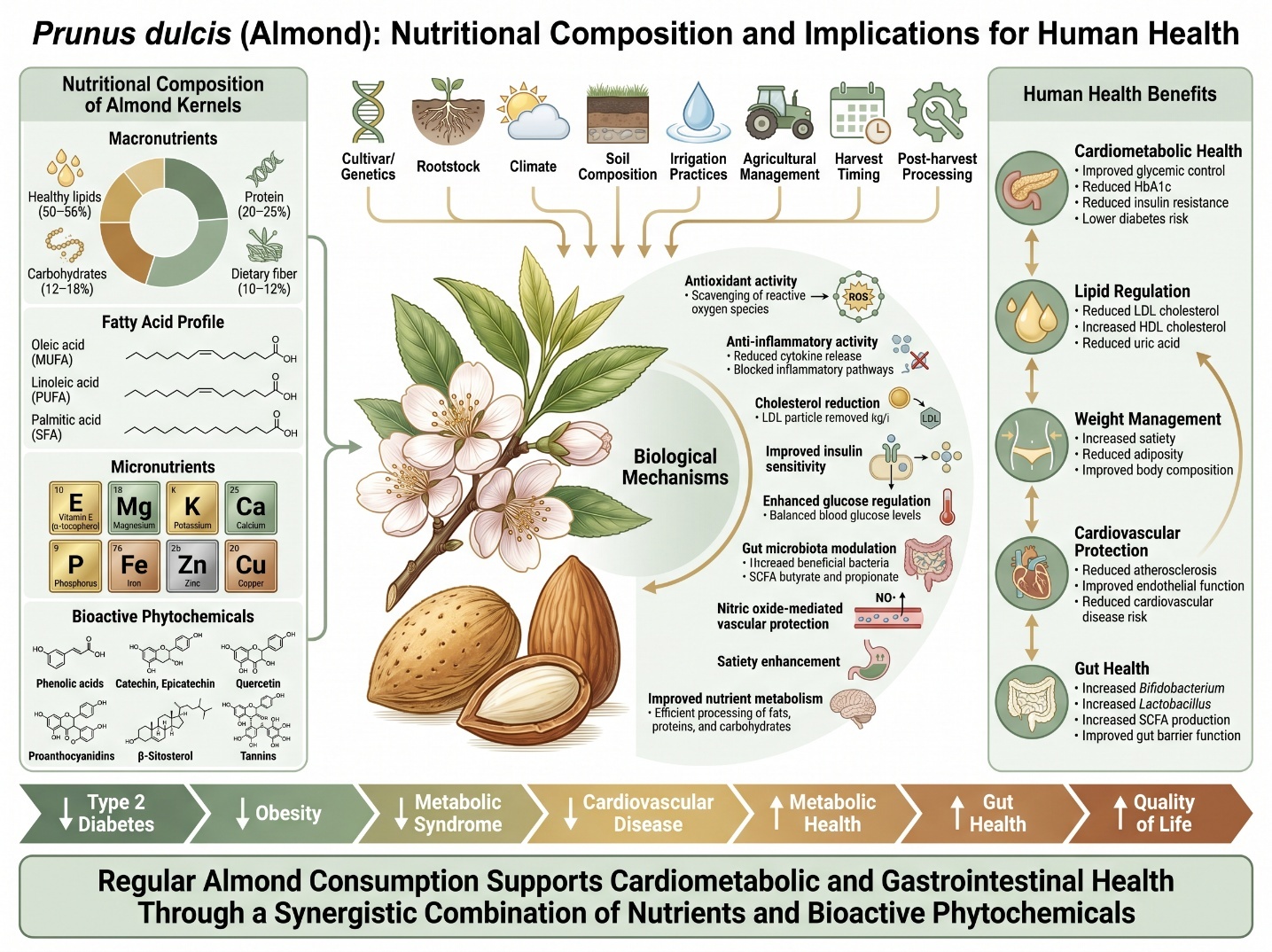
Beyond classic nutrients, almond kernels—and especially their brown skin—contain diverse bioactive phytochemicals. Phenolic compounds include phenolic acids (e.g., chlorogenic acid), flavonoids (catechin, epicatechin, quercetin), and proanthocyanidins. Phytosterols, notably β-sitosterol (60–120 mg/100 g), contribute to cholesterol-lowering effects. Tannins and melanin-like pigments in the skin add antioxidant capacity. However, the nutritional profile varies significantly by cultivar, rootstock, climate, soil composition, irrigation practices, and harvest timing. Post-harvest processing (roasting, blanching, oil extraction) further alters bioavailability and stability of nutrients. Understanding this compositional complexity is essential for interpreting health effects and optimizing almond production for maximal nutritional benefit.[8][9]
3. Biological and Health Promoting Activities of Prunus Dulcis
3.1. Improved glycemic control and diabetes prevention
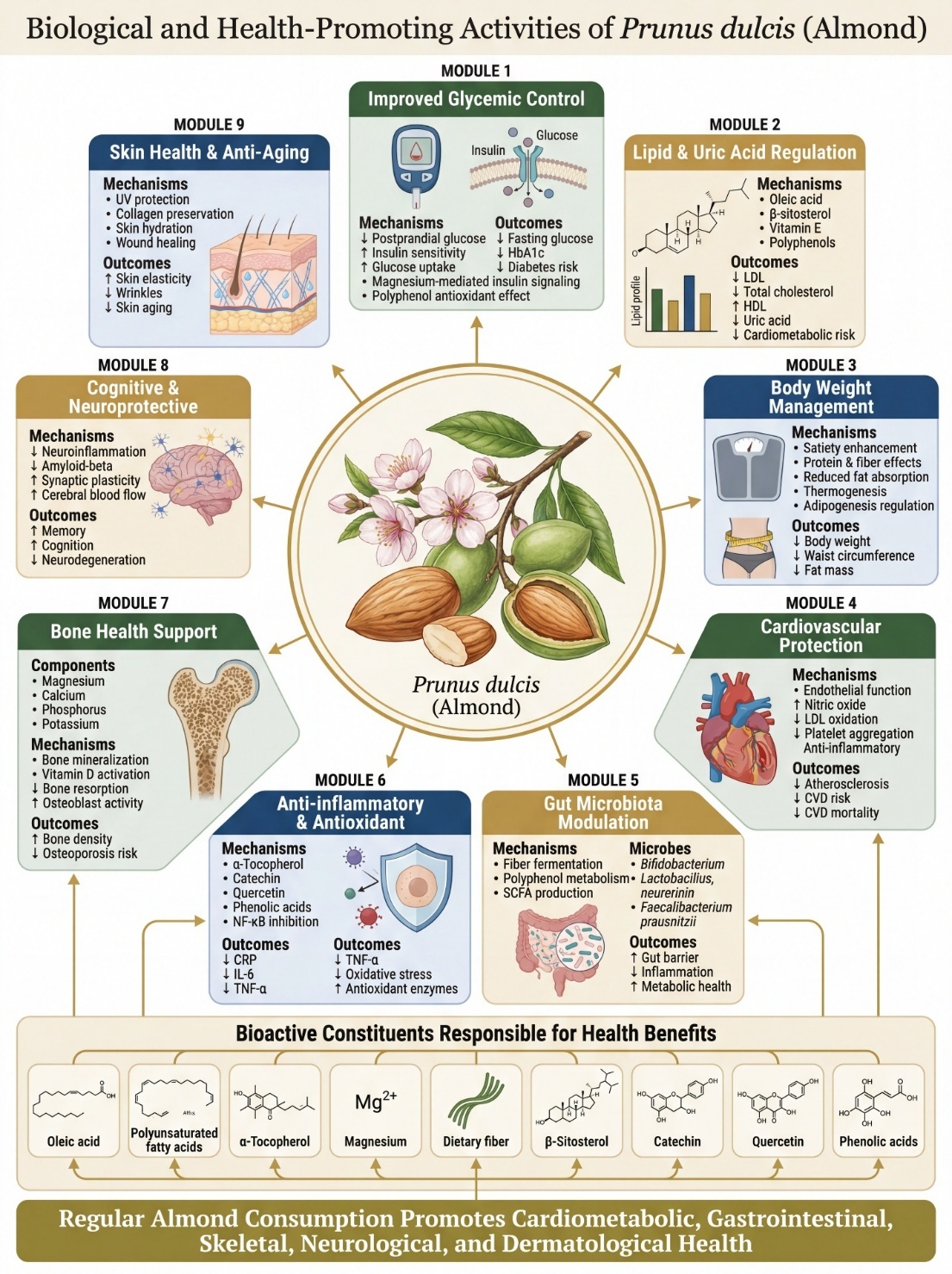
Regular almond consumption enhances glycemic control through multiple mechanisms. Almonds' low carbohydrate content, high fiber, and healthy fat profile reduce postprandial glucose excursions by slowing carbohydrate digestion and absorption. The high magnesium content (250–280 mg/100 g) supports insulin signaling and glucose uptake, while almond polyphenols improve insulin sensitivity by modulating oxidative stress and inflammatory pathways. Randomized controlled trials demonstrate that substituting almonds for high-carbohydrate snacks significantly lowers fasting glucose, HbA1c, and insulin levels in individuals with type 2 diabetes or metabolic syndrome. Acute feeding studies show reduced postprandial glycemia when almonds are consumed with carbohydrate-rich meals, attributed to fat-induced delays in gastric emptying and enhanced insulin-mediated glucose disposal. Long-term interventions (8–12 weeks) report sustained improvements in glycemic markers without adverse weight gain, supporting almonds as a dietary strategy for diabetes prevention and management.[10][11][12]
3.2. Favorable lipid and uric acid modulation
Almonds exert potent lipid-modulating effects, primarily through their unsaturated fatty acid profile, plant sterols, and polyphenols. Regular intake reduces LDL-cholesterol by 10–15% and total cholesterol by 5–10%, while maintaining or modestly increasing HDL-cholesterol. Oleic acid displaces saturated fats in cell membranes, enhancing LDL receptor activity and cholesterol clearance. β-sitosterol competes with dietary cholesterol for intestinal absorption, while vitamin E and flavonoids inhibit LDL oxidation. Meta-analyses of RCTs confirm these benefits across diverse populations, with greater effects in individuals with elevated baseline cholesterol. Almonds also lower uric acid levels by 0.5–1.0 mg/dL, possibly through improved renal excretion and reduced oxidative stress in purine metabolism. This dual lipid-uric acid modulation reduces cardiovascular and metabolic syndrome risk.[13][14][15][16]
3.3. Body weight management and obesity prevention
Despite high caloric density (570–600 kcal/100 g), almonds do not promote weight gain when consumed regularly. Multiple RCTs show that 40–60 g/day almond intake over 3–12 weeks results in neutral or modestly reduced body weight, waist circumference, and fat mass. Mechanisms include enhanced satiety from protein/fiber-induced gastrin release, reduced subsequent energy intake, increased postprandial thermogenesis, and incomplete fat absorption (10–20% of almond fat remains unabsorbed due to cellular wall structure). Almond phenolics may also modulate adipogenesis and lipid metabolism genes. Long-term observational studies link regular nut consumption with lower obesity prevalence, supporting almonds as a weight-management tool.[12][17][18]
3.4. Reduced cardiovascular disease risk
Almond consumption lowers cardiovascular disease (CVD) risk by 20–30% in epidemiological studies. Benefits stem from combined improvements in lipid profiles, glycemic control, inflammation (reduced CRP, IL-6), endothelial function (enhanced nitric oxide), and oxidative stress (increased plasma antioxidant capacity). Meta-analyses report 15% lower CVD mortality per 20 g/day nut intake. Almonds' vitamin E, magnesium, and polyphenols protect against atherosclerosis by inhibiting LDL oxidation, platelet aggregation, and vascular inflammation.[19][20][21][22]
3.5. Prebiotic properties and gut health promotion
Almonds exhibit prebiotic effects by modulating gut microbiota composition. Feeding trials show increased bifidobacteria, lactobacilli, and butyrate-producing bacteria (e.g., Faecalibacterium prausnitzii) after 3–4 weeks of 40–60 g/day almond intake(3). Almond fiber and skin polyphenols reach the colon, undergoing microbial fermentation to produce short-chain fatty acids (acetate, propionate, butyrate) that enhance gut barrier integrity, reduce inflammation, and regulate immunity. Butyrate also improves glucose metabolism and reduces cancer risk. These gut-mediated effects contribute to almonds' systemic cardiometabolic benefits.[3][23]
3.6. Anti-inflammatory and antioxidant effects
Almonds possess significant anti-inflammatory and antioxidant properties that contribute to systemic health. The high vitamin E content (α-tocopherol), along with flavonoids (catechin, quercetin) and phenolic acids in the skin, provides potent free-radical scavenging activity.[24] Clinical trials demonstrate that regular almond intake (40–60 g/day) reduces key inflammatory markers including C-reactive protein (CRP), interleukin-6 (IL-6), and tumor necrosis factor-alpha (TNF-α) by 10–20%. These effects stem from modulation of NF-κB signaling and suppression of pro-inflammatory cytokine production.[17] Almond polyphenols also enhance endogenous antioxidant enzymes (superoxide dismutase, glutathione peroxidase), reducing oxidative DNA damage and lipid peroxidation. This dual anti-inflammatory/antioxidant action protects against chronic diseases driven by oxidative stress, including cardiovascular disease, diabetes, and neurodegenerative conditions.[14][25][26]
3.7. Bone health support
Almonds contribute to bone health through their rich mineral profile and bioactive compounds. Significant amounts of magnesium (250–280 mg/100 g), calcium (240–270 mg/100 g), potassium, and phosphorus support bone mineralization and structural integrity.[27] Magnesium enhances calcium absorption and activates vitamin D, while potassium reduces urinary calcium excretion by neutralizing acid load.[28] Almond polyphenols may also inhibit osteoclast-mediated bone resorption and stimulate osteoblast activity. Observational studies link regular nut consumption with higher bone mineral density and lower fracture risk, particularly in older adults. Although almond-specific bone trials are limited, their mineral composition and antioxidant properties suggest a protective role against osteoporosis.[14][29][30]
3.8. Cognitive and neuroprotective potential
Emerging evidence suggests almonds may support cognitive function and neuroprotection. The combination of vitamin E, flavonoids, and unsaturated fatty acids protects neuronal membranes from oxidative damage and maintains membrane fluidity essential for signal transduction.[31] Magnesium supports synaptic plasticity and neurotransmitter regulation. Animal studies show almond polyphenols reduce neuroinflammation, inhibit amyloid-beta accumulation, and improve memory performance.[32][33] Human data indicate that higher nut consumption correlates with better cognitive scores in older adults, possibly through improved vascular health, reduced inflammation, and enhanced cerebral blood flow.[34] While almond-specific neurocognitive trials are scarce, their nutrient profile aligns with known neuroprotective dietary patterns.[35]
3.9. Skin health and anti-aging benefits
Almonds support skin health through multiple mechanisms. Vitamin E protects against UV-induced oxidative damage and maintains skin barrier integrity. Polyphenols reduce collagen degradation by inhibiting matrix metalloproteinases, while healthy fats maintain skin hydration and elasticity. Magnesium supports wound healing and reduces dermatological inflammation. Traditional use of almond oil for skin moisturization aligns with modern findings showing improved skin elasticity and reduced wrinkle depth after topical or dietary almond exposure. Antioxidant capacity also mitigates age-related skin changes, supporting almonds' role in cosmetic nutrition and dermatological health.[35][36][37]
4. Conclusion
Almonds (Prunus dulcis Mill.) are nutrient-dense functional foods that provide a unique combination of unsaturated fatty acids, high-quality proteins, dietary fiber, essential micronutrients, and diverse bioactive phytochemicals. Current epidemiological, clinical, and mechanistic evidence supports their beneficial role in improving cardiometabolic health, regulating glycemic control and lipid metabolism, supporting weight management, and promoting gut health through microbiota modulation. Additional antioxidant, anti-inflammatory, neuroprotective, and bone-supporting properties further highlight their potential in disease prevention and health promotion.
The nutritional quality and bioactivity of almonds are influenced by genetic, environmental, and processing factors, emphasizing the importance of optimizing cultivation and post-harvest practices to maximize health benefits. Despite substantial progress, further research is needed to elucidate the specific mechanisms underlying almond-associated health effects, standardize clinical study designs, and explore the relationship between agronomic factors and nutritional outcomes. Overall, almonds represent a valuable component of healthy dietary patterns and offer significant potential as a sustainable food for supporting long-term human health.
5. Acknowledgement
The authors are grateful to Shri Gajanan Maharaj Shikshan Prasarak Mandal's Sharadchandra Pawar College of Pharmacy for providing the necessary facilities, academic support, and a conducive research environment for the successful completion of work. The authors also extend their sincere gratitude to the principal, faculty members, and staff of the institution for their continuous encouragement and support throughout the study.
6. Source of Funding
None.
7. Conflict of Interest
None.
References
- Trumbo PR, Ard J, Bellisle F, Drewnowski A, Gilbert JA, Kleinman R. Perspective: Current Scientific Evidence and Research Strategies in the Role of Almonds in Cardiometabolic Health. Curr Dev Nutr. 2024;9(1):104516. [Google Scholar] [Crossref]
- Siddiqua A, Hussain S, Syed SK. Phytochemistry, Nutritional and Medicinal Importance of Almond. 2021. [Google Scholar] https://4.imimg.com/data4/HS/WH/MY-1238623/almond-plant-500x500.jpg
- Tahiri M, Gilbert JA. Examining the potential prebiotic effect of almonds. J Appl Microbiol. 2025;136(4):lxaf078. [Google Scholar] [Crossref]
- Creedon AC, Dimidi E, Hung ES, Rossi M, Probert C, Grassby T. The impact of almonds and almond processing on gastrointestinal physiology, luminal microbiology, and gastrointestinal symptoms: a randomized controlled trial and mastication study. Am J Clin Nutr. 2022;116(6):1790-1804. [Google Scholar] [Crossref]
- Beltrán Sanahuja A, Maestre Pérez SE GTNVGA, Prats Moya MS. Variability of Chemical Profile in Almonds (Prunus dulcis) of Different Cultivars and Origins. Foods. 2021;10(1):153. [Google Scholar] [Crossref]
- Dreher ML. A Comprehensive Review of Almond Clinical Trials on Weight Measures, Metabolic Health Biomarkers and Outcomes, and the Gut Microbiota. Nutr. 2021;13(6):1968. [Google Scholar] [Crossref]
- Asad M, Malik A. Almond Varieties: Nutritional and Chemical Composition and Health Benefits and Culinary Application. Food Science and Nutrition. 2024. [Google Scholar] [Crossref]
- Delgado-Osorio A NPBPBSHNDTMÁPDLCS. Cultivar and Harvest Time of Almonds Affect Their Antioxidant and Nutritional Profile through Gut Microbiota Modifications. Antioxidants (Basel). 2024;13(1):84. [Google Scholar] [Crossref]
- Oliveira I, Meyer AS, Afonso S, Sequeira A, Vilela A, Goufo P. Effects of Different Processing Treatments on Almond (Prunus dulcis) Bioactive Compounds, Antioxidant Activities, Fatty Acids, and Sensorial Characteristics. Plants (Basel). 2020;9(11):1627. [Google Scholar] [Crossref]
- Cohen AE, Johnston CS. Almond ingestion at mealtime reduces postprandial glycemia and chronic ingestion reduces hemoglobin A(1c) in individuals with well-controlled type 2 diabetes mellitus. Metab. 2011;60(9):1312-7. [Google Scholar] [Crossref]
- Li SC, Liu YH, Liu JF, Chang WH, Chen CM, Chen CY. Almond consumption improved glycemic control and lipid profiles in patients with type 2 diabetes mellitus. Metab. 2011;60(4):474-9. [Google Scholar] [Crossref]
- Gulati S, Misra A, Tiwari R, Sharma M, Pandey RM, Upadhyay AD. Premeal almond load decreases postprandial glycaemia, adiposity and reversed prediabetes to normoglycemia: A randomized controlled trial. Clin Nutr ESPEN. 2023;54:12-22. [Google Scholar] [Crossref]
- Morvaridzadeh M, Qorbani M, Shokati Eshkiki Z EM, Mohammadi Ganjaroudi N, Toupchian O. The effect of almond intake on cardiometabolic risk factors, inflammatory markers, and liver enzymes: A systematic review and meta-analysis. Phytother Res. 2022;36(12):4325-44. [Google Scholar] [Crossref]
- Kamil A, Chen CY. Health benefits of almonds beyond cholesterol reduction. J Agric Food Chem. 2012;60(27):6694-702. [Google Scholar] [Crossref]
- Beaver LM, Leonard SW, Uesugi SL, Wong CP, Lytle LM, Vasudevan A. Beneficial changes in total cholesterol, LDL-C, biomarkers of intestinal inflammation, and vitamin E status in adults with metabolic syndrome consuming almonds as snack foods: a randomized controlled clinical trial. Nutr Res. 2025. [Google Scholar] https://linkinghub.elsevier.com/retrieve/pii/S0271531725000636
- Berryman CE, Preston AG, Karmally W, Deckelbaum RJ, Kris-Etherton PM. Effects of almond consumption on the reduction of LDL-cholesterol: a discussion of potential mechanisms and future research directions. Nutr Rev. 2011;69(4):171-85. [Google Scholar] [Crossref]
- Adepoju A, Rabbani E, Brickey P, Vieira-Potter V, Dhillon J. Almond Consumption Improves Inflammatory Profiles Independent of Weight Change: A 6-Week Randomized Controlled Trial in Adults with Obesity. Nutr. 2026;18(5):875. [Google Scholar] [Crossref]
- Robinson DT, Van Horn L, Balmert L, Silver RM, Parry S, Haas DM. Dietary Fat and Fatty Acid Intake in Nulliparous Women: Associations with Preterm Birth and Distinctions by Maternal BMI Current Developments in Nutrition. 2021. [Google Scholar] https://linkinghub.elsevier.com/retrieve/pii/S2475299122105524
- Mayhew AJ DSR, Meyre D, Anand SS, Mente A. A systematic review and meta-analysis of nut consumption and incident risk of CVD and all-cause mortality. Br J Nutr. 2016;115(2):212-25. [Google Scholar] [Crossref]
- Becerra-Tomás N PGIWCKC, Kahleova H RD, Sievenpiper JL. Nut consumption and incidence of cardiovascular diseases and cardiovascular disease mortality: a meta-analysis of prospective cohort studies. Nutr Rev. 2019;77(10):691-709. [Google Scholar] [Crossref]
- Singar S, Kadyan S, Patoine C, Park G, Arjmandi B, Nagpal R. The Effects of Almond Consumption on Cardiovascular Health and Gut Microbiome: A Comprehensive Review. Nutr. 2024;16(12):1964. [Google Scholar] [Crossref]
- Liu JF, Liu YH, Chen CM, Chang WH, Chen CY. The effect of almonds on inflammation and oxidative stress in Chinese patients with type 2 diabetes mellitus: a randomized crossover controlled feeding trial. Eur J Nutr. 2013;52(3):927-35. [Google Scholar] [Crossref]
- Liu Z, Lin X, Huang G, Zhang W, Rao P, Ni L. Prebiotic effects of almonds and almond skins on intestinal microbiota in healthy adult humans. Anaerobe. 2014;26:1-6. [Google Scholar] [Crossref]
- Chen CY, Blumberg JB. In vitro activity of almond skin polyphenols for scavenging free radicals and inducing quinone reductase. J Agric Food Chem. 2008;56(12):4427-34. [Google Scholar] [Crossref]
- Fatahi S, Daneshzad E, Lotfi K, Azadbakht L. The Effects of Almond Consumption on Inflammatory Biomarkers in Adults: A Systematic Review and Meta-Analysis of Randomized Clinical Trials. Adv Nutr. 2022;13(5):1462-75. [Google Scholar] [Crossref]
- Wijeratne SS, Abou-Zaid MM, Shahidi F. Antioxidant polyphenols in almond and its coproducts. J Agric Food Chem. 2006;54(2):312-8. [Google Scholar] [Crossref]
- Özcan MM. A review on some properties of almond: ımpact of processing, fatty acids, polyphenols, nutrients, bioactive properties, and health aspects. J Food Sci Technol. 2023;60(5):1493-1504. [Google Scholar] [Crossref]
- Abate V, Vergatti A, Altavilla N, Garofano F, Salcuni AS, Rendina D. Potassium Intake and Bone Health: A Narrative Review. Nutr. 2024;16(17):3016. [Google Scholar] [Crossref]
- Truong VL, Bak MJ, Jun M, Kong AN, Ho CT, Jeong WS. Antioxidant defense and hepatoprotection by procyanidins from almond (Prunus amygdalus) skins. J Agric Food Chem. 2014;62(34):8668-78. [Google Scholar] [Crossref]
- Rizvi S, Raza ST, Ahmed F, Ahmad A, Abbas S, Mahdi F. The role of vitamin e in human health and some diseases. Sultan Qaboos Univ Med J. 2014;14(2):e157-65. [Google Scholar]
- Essa MM, Subash S, Parvathy S, Meera A, Guillemin GJ, Memon MA. Almonds and brain functionality. Food and Brain Health. 2014. [Google Scholar]
- Kumari M. Nutritional Strategies for Neuroprotection: Vitamins, Minerals, and Beyond. Nourishing the Brain. 2026. [Google Scholar] [Crossref]
- Alami K, Nazari Z, Bayat R, Bayat A, Qasemi S, Karimi F. Cognitive Effects of Almond Consumption: A Review of Animal Studies. Nutrition and Dietary Supplements. 2024;16:105-28. [Google Scholar] [Crossref]
- Barbour JA, Howe PR, Buckley JD, Bryan J, Coates AM. Nut consumption for vascular health and cognitive function. Nutr Res Rev. 2014;27(1):131-58. [Google Scholar] [Crossref]
- Chen CY, Milbury PE, Lapsley K, Blumberg JB. Flavonoids from almond skins are bioavailable and act synergistically with vitamins C and E to enhance hamster and human LDL resistance to oxidation. J Nutr. 2005;135(6):1366-73. [Google Scholar] [Crossref]
- Blaak J, Staib P. An updated review on efficacy and benefits of sweet almond, evening primrose and jojoba oils in skin care applications. Int J Cosmet Sci. 2022;44(1):1-9. [Google Scholar] [Crossref]
- Rybak I, Carrington AE, Dhaliwal S, Hasan A, Wu H, Burney W. Prospective Randomized Controlled Trial on the Effects of Almonds on Facial Wrinkles and Pigmentation. Nutr. 2021;13(3):785. [Google Scholar] [Crossref]
- 1. Introduction
- 2. Composition and Nutritional Profile of Almond Kernels
- 3. Biological and Health Promoting Activities of Prunus Dulcis
- 3.1. Improved glycemic control and diabetes prevention
- 3.2. Favorable lipid and uric acid modulation
- 3.3. Body weight management and obesity prevention
- 3.4. Reduced cardiovascular disease risk
- 3.5. Prebiotic properties and gut health promotion
- 3.6. Anti-inflammatory and antioxidant effects
- 3.7. Bone health support
- 3.8. Cognitive and neuroprotective potential
- 3.9. Skin health and anti-aging benefits
- 4. Conclusion
- 5. Acknowledgement
- 6. Source of Funding
- 7. Conflict of Interest
- References
Article Metrics
- Visibility 500 Views
- Downloads 496 Views
- DOI 10.18231/j.pharmacist.16013.1783399313
-
CrossMark

- Citation
- Received Date May 10, 2026
- Accepted Date June 15, 2026
- Publication Date July 07, 2026